Demystifying Blockchain Beyond Crypto: 4 Practical U.S. Government and Industry Applications

The real revolution happening right now in the United States has nothing to do with digital coins, as the true power of blockchain beyond crypto lies in reshaping how we secure and verify our physical world.
From federal agencies to corporate boardrooms, American leaders are quietly deploying decentralized ledgers to solve massive, real-world logistical challenges. This shift from speculative asset to infrastructure backbone marks a turning point for institutional efficiency, security, and trust.
As new government directives and industry standards emerge for 2026, keeping track of these practical rollouts is essential. Here is a look at four major U.S. applications defining this technological evolution, what changed this week, and the key developments you need to monitor next.
The Evolving Landscape of Blockchain Beyond Crypto
Blockchain technology, once synonymously linked with cryptocurrencies, is rapidly maturing into a foundational infrastructure for a multitude of applications across various sectors.
Its inherent properties of immutability, transparency, and decentralization offer compelling solutions to long-standing challenges in data integrity and operational efficiency.
The United States government and key industries are increasingly exploring and implementing these non-cryptocurrency uses, recognizing the profound potential for transformation.
These efforts are poised to redefine how transactions are recorded, identities are managed, and supply chains operate, moving beyond speculative digital assets.
By 2026, several practical applications are expected to be firmly established, demonstrating blockchain’s versatility and its capacity to deliver tangible benefits. This shift marks a critical phase in the technology’s adoption, emphasizing its utility as a robust data management and security tool.
Enhancing Supply Chain Transparency and Traceability
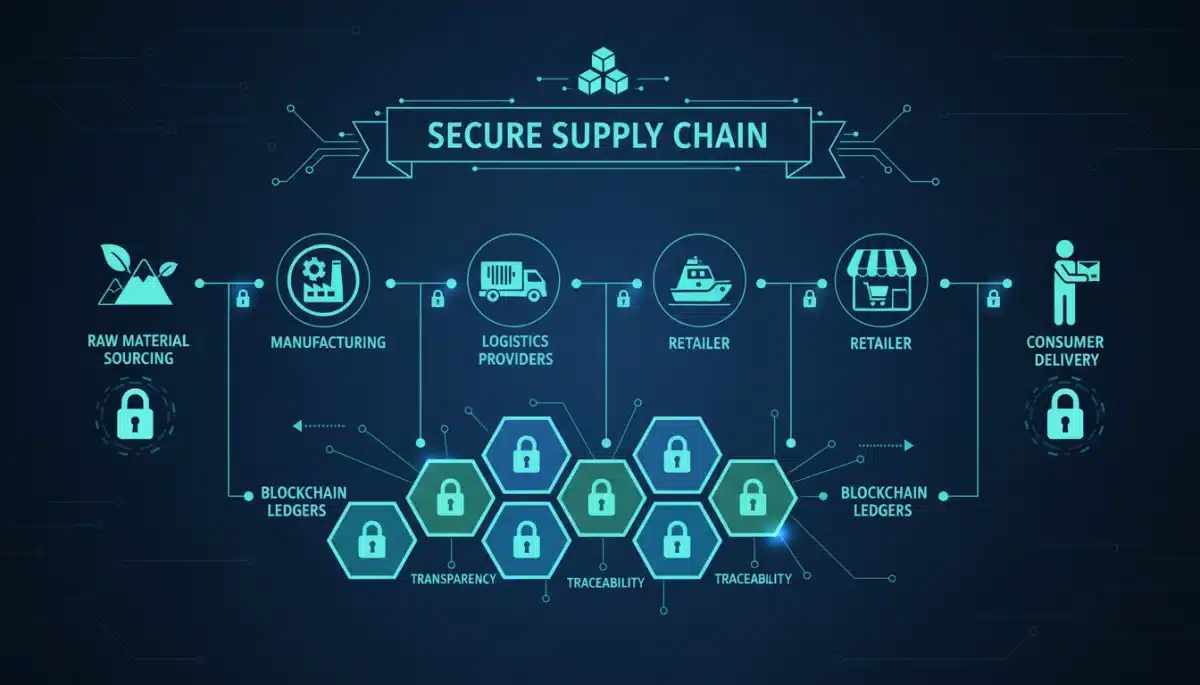
One of the most promising applications of Blockchain Beyond Crypto is in revolutionizing supply chain management.
The ability to create an immutable ledger of every step a product takes, from raw material to consumer, addresses critical issues of provenance, authenticity, and ethical sourcing.
Major U.S. industries, including agriculture, pharmaceuticals, and manufacturing, are actively piloting blockchain solutions to enhance visibility and trust.
This increased transparency helps combat counterfeiting, improves recall efficiency, and ensures compliance with regulatory standards, offering significant value to both businesses and consumers.
By providing a single, verifiable source of truth, blockchain can streamline complex global supply chains, reduce disputes, and build greater confidence in product integrity.
The implications for consumer safety and brand reputation are substantial, making this a high-priority area for adoption.
Tracking Pharmaceuticals for Safety
The pharmaceutical industry faces immense challenges in ensuring the authenticity and safe delivery of medications. Counterfeit drugs pose a severe public health risk and cost the industry billions annually.
Blockchain offers a robust solution by enabling end-to-end tracking of pharmaceutical products. Each batch can be recorded on a distributed ledger, providing an unalterable history that verifies its origin, handling, and distribution, thereby safeguarding patients.
- Enhanced drug authenticity verification.
- Streamlined recall processes.
- Improved compliance with regulatory mandates like the Drug Supply Chain Security Act (DSCSA).
- Reduced incidence of counterfeit medications entering the supply chain.
Food Provenance and Consumer Trust
Consumers are increasingly demanding to know the origin and journey of their food. From farm to fork, transparency in the food supply chain is paramount for safety and ethical reasons.
Blockchain allows for detailed records of food products, including farming practices, processing, and transportation conditions.
This data can be instantly accessed and verified, empowering consumers to make informed choices and enabling rapid responses to contamination events.
Secure Identity Management and Digital Credentials
The U.S. government and various private entities are investigating blockchain’s potential to establish more secure and efficient digital identity systems.
Traditional identity management often relies on centralized databases, which are vulnerable to breaches and can be cumbersome for individuals.
Blockchain-based identity solutions, often referred to as Self-Sovereign Identity (SSI), empower individuals with greater control over their personal data.
Instead of storing sensitive information in multiple locations, users can manage their digital credentials on a secure, personal ledger, granting access only when necessary.
This approach promises to reduce fraud, streamline verification processes, and enhance privacy across a range of government services and commercial interactions. The shift towards decentralized identity marks a significant step forward in digital security and user empowerment.
Government Initiatives for Citizen Identity
Federal agencies are exploring how blockchain can secure sensitive citizen data and streamline access to government services. This includes applications in areas like voter registration, social security records, and digital permits.
By creating verifiable digital identities, the government can reduce the administrative burden associated with traditional paperwork and enhance the integrity of public records. This also offers a more robust defense against identity theft and unauthorized access.
- Secure storage of personal identification documents.
- Streamlined verification for government services.
- Reduced fraud in public benefit programs.
- Enhanced privacy for individual citizens.
Decentralized Credentials for Education and Employment
Educational institutions and employers can leverage blockchain to issue secure, verifiable digital credentials. Diplomas, certifications, and employment records can be stored on a distributed ledger, making them tamper-proof and easily shareable with authorized parties.
This eliminates the need for manual verification processes, reduces the risk of fraudulent credentials, and provides individuals with a portable, lifelong record of their achievements.
The efficiency gains and increased trust are significant for both academic and professional sectors.
Modernizing Government Record-Keeping and Public Services
The sheer volume of records maintained by government agencies presents a significant administrative and security challenge.
From land registries to legal documents, the integrity and accessibility of these records are crucial for societal function. Blockchain Beyond Crypto offers a transformative solution.
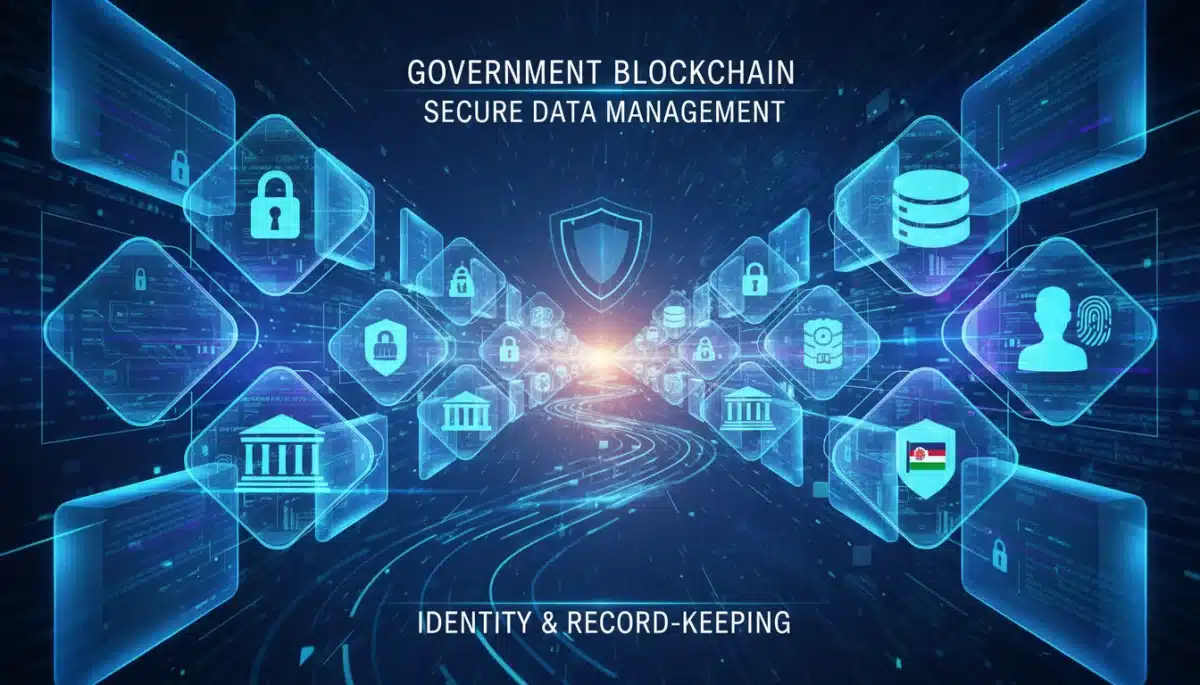
Implementing blockchain for government record-keeping can introduce unprecedented levels of transparency, immutability, and auditability. This can drastically reduce the potential for fraud, minimize administrative costs, and improve public trust in governmental processes.
By creating a distributed and encrypted ledger, agencies can ensure that records are secure from alteration and readily available to authorized personnel, while maintaining privacy for sensitive information. This modernization effort is critical for efficient governance in the digital age.
Securing Land and Property Records
Property ownership and transfer processes are often complex, prone to disputes, and vulnerable to fraud. Traditional paper-based systems can be inefficient and lack transparency.
Blockchain can establish an immutable record of land titles and property transactions. This provides clear, verifiable ownership, reduces the need for intermediaries, and streamlines the transfer process, making it more secure and accessible.
- Prevention of property fraud and disputes.
- Streamlined property transfer processes.
- Reduced administrative costs for land registries.
- Increased transparency and public trust in property records.
Enhancing Voting System Integrity
The integrity of electoral processes is a cornerstone of democracy. Concerns about voter fraud, election security, and the accuracy of ballot counting are persistent challenges.
While still in exploratory phases, blockchain could offer a secure and transparent method for recording votes. Each vote could be an encrypted transaction on a distributed ledger, ensuring it is counted accurately, cannot be altered, and maintaining voter anonymity.
Intellectual Property Protection and Royalty Distribution
Protecting intellectual property (IP) and ensuring fair compensation for creators is a complex task in the digital age.
From music to patents, unauthorized use and opaque royalty distribution systems plague many industries. Blockchain Beyond Crypto provides innovative solutions.
Blockchain can create an immutable timestamped record of intellectual property creation, providing irrefutable proof of ownership.
Furthermore, smart contracts can automate royalty payments, ensuring creators receive their fair share instantly and transparently, bypassing traditional intermediaries.
This application holds immense potential for creative industries, inventors, and content creators, offering enhanced protection and a more equitable distribution of revenue. The ability to track usage and automate payments represents a significant leap forward in IP management.
Timestamping and Ownership Verification
Establishing clear proof of creation and ownership for intellectual property is crucial for legal protection and commercialization. Traditional methods can be slow and subject to legal challenges.
Blockchain allows creators to register their IP on a distributed ledger, creating an unalterable timestamp that proves when the work was created and by whom. This provides a robust, verifiable record that can deter infringement and simplify legal recourse.
Automated Royalty and Licensing Payments
The process of distributing royalties and managing licensing agreements is often opaque and inefficient, especially in industries like music and publishing. Creators frequently face delays and lack transparency regarding their earnings.
Smart contracts on a blockchain can automate royalty payments based on predefined terms and conditions. When a piece of IP is used or sold, the smart contract automatically triggers a payment to the creator, ensuring timely and accurate compensation without intermediaries.
- Instant and transparent royalty distribution.
- Reduced administrative costs for licensing.
- Enhanced visibility into IP usage and earnings.
- Fairer compensation for artists and innovators.
Challenges and Regulatory Considerations for Blockchain Adoption
While the potential of Blockchain Beyond Crypto is vast, its widespread adoption in government and industry faces several critical challenges.
These include scalability issues, interoperability between different blockchain networks, and the significant task of integrating new systems with existing legacy infrastructure.
Furthermore, regulatory clarity remains a key hurdle. Governments are grappling with how to effectively oversee and standardize blockchain applications without stifling innovation.
Establishing clear legal frameworks for data ownership, privacy, and smart contract enforceability is essential for fostering trust and widespread implementation.
Addressing these challenges requires concerted efforts from technologists, policymakers, and industry leaders. Collaborative initiatives are crucial to developing robust, secure, and legally compliant blockchain solutions that can deliver on their promise.
Scalability and Performance Concerns
Many early blockchain platforms struggle with transaction throughput, which can limit their applicability for large-scale enterprise and government use cases. As the number of users and transactions increases, network performance can degrade.
Developers are actively working on solutions such as sharding, layer-2 protocols, and new consensus mechanisms to enhance scalability. These advancements are critical for blockchain to handle the demands of national-level applications.
- Ongoing research into more efficient consensus algorithms.
- Development of layer-2 scaling solutions for faster transactions.
- Focus on enterprise-grade blockchain platforms designed for high throughput.
- Optimization of data storage and retrieval on distributed ledgers.
Interoperability and Integration
For blockchain to realize its full potential, different networks must be able to communicate and exchange data seamlessly. A lack of interoperability can create isolated data silos, undermining the benefits of a distributed ledger system.
Efforts are underway to develop standards and protocols that facilitate cross-chain communication. Additionally, integrating blockchain solutions with existing legacy IT systems presents a complex technical challenge that requires careful planning and execution.
The Future Impact of Blockchain Beyond Crypto by 2026
By 2026, the foundational work currently being undertaken in the U.S. government and various industries is expected to yield tangible results, solidifying the role of Blockchain Beyond Crypto as a mainstream technology.
The initial practical applications will serve as blueprints for broader adoption, demonstrating the technology’s inherent value beyond speculative assets.
We anticipate a significant shift in public perception, moving away from blockchain’s association solely with volatile cryptocurrencies towards its recognition as a powerful tool for secure data management, transparent operations, and enhanced trust.
This evolution will be driven by successful implementations and clear regulatory guidance.
The ongoing development and deployment of these solutions will not only improve efficiency and security but also foster a new era of digital trust and accountability.
The benefits will extend across critical infrastructure, public services, and daily commercial interactions, reshaping the digital landscape.
| Application Area | Key Benefit |
|---|---|
| Supply Chain | Enhanced transparency and traceability from source to consumer. |
| Identity Management | Secure and user-controlled digital identities, reducing fraud. |
| Government Records | Immutable and auditable public records, improving trust and efficiency. |
| Intellectual Property | Verified ownership and automated royalty distribution for creators. |
Frequently Asked Questions About Blockchain Beyond Crypto
Beyond cryptocurrencies, blockchain’s primary value lies in its ability to create immutable, transparent, and secure records. This makes it ideal for applications requiring high data integrity, such as supply chain tracking, secure identity management, and streamlined record-keeping across various industries and government sectors. It builds trust without intermediaries.
Blockchain enhances supply chain transparency by providing a shared, unchangeable ledger of every transaction and movement of a product. Each step, from sourcing raw materials to final delivery, is recorded, allowing all authorized participants to view the product’s journey. This helps verify authenticity, track provenance, and quickly identify issues like contamination or counterfeiting.
Yes, blockchain can significantly secure personal identity information through decentralized identity solutions. Instead of centralized databases, individuals control their own digital credentials, granting access selectively and securely. This reduces vulnerability to data breaches, minimizes fraud, and empowers users with greater privacy and autonomy over their personal data.
The U.S. government is actively exploring blockchain for various public services, including secure record-keeping, identity management, and enhancing voting system integrity. Agencies are conducting pilot programs and developing regulatory frameworks to facilitate safe and effective implementation. Their role is crucial in setting standards and demonstrating large-scale practical applications.
Widespread blockchain adoption faces challenges including scalability, ensuring interoperability between different networks, and integrating with existing legacy systems. Regulatory clarity is also a significant hurdle, as governments work to establish legal frameworks for data ownership, privacy, and smart contract enforceability. Addressing these requires collaborative innovation and policy development.
Looking Ahead: The Integrated Future of Blockchain
The advancements in Blockchain Beyond Crypto applications within the U.S. government and industry signify a pivotal moment for the technology.
What emerges by 2026 will be a more integrated and trusted digital infrastructure, impacting everything from national security to daily consumer interactions.
It is essential to monitor regulatory developments, pilot program outcomes, and industry-wide collaborations, as these will define the pace and scope of future adoption.
The ongoing evolution of blockchain is poised to deliver profound societal and economic benefits, moving beyond its initial niche to become a fundamental component of the digital economy.
