The 2026 Demand for Human-AI Collaboration: Why Emotional Intelligence is Now a Top U.S. Job Skill

As algorithms take over routine workplace tasks, your tech skills are no longer your only competitive edge. Succeeding in the era of Human-AI Collaboration requires a deeply human superpower: the ability to navigate emotions, read between the lines, and manage interpersonal dynamics.
This year, corporate leaders are realizing that artificial intelligence can process data, but it cannot cultivate empathy or resolve team friction. Consequently, high emotional quotient (EQ) has transformed from a nice-to-have soft skill into an absolute prerequisite for managing automated workflows.
As the American job market rapidly adapts to these hybrid ecosystems, standing out requires balancing technical literacy with psychological insight. Here is how mastering your soft skills will secure your relevance in tomorrow’s automated workplace.
The Shifting Landscape of Work: AI Integration and Human Skills
The proliferation of artificial intelligence across industries is fundamentally redesigning job functions and organizational structures. Tasks once performed solely by humans are now augmented or automated by AI, leading to an urgent re-evaluation of essential workplace competencies.
This rapid transformation is not just a technological upgrade but a paradigm shift in how work gets done.
As AI handles repetitive and data-intensive tasks, the emphasis on human capabilities that AI cannot replicate intensifies. Skills such as critical thinking, creativity, and complex problem-solving are gaining prominence, but none more so than emotional intelligence.
The effective deployment of AI hinges on human oversight and a nuanced understanding of its ethical and social implications.
The demand for human-AI collaboration emotional intelligence is not speculative; it’s a measurable trend observed in hiring patterns and skills gap analyses.
Organizations are actively seeking professionals who can seamlessly integrate AI tools while maintaining high levels of interpersonal effectiveness. This dual requirement defines the modern workforce.
Emotional Intelligence: The Bridge to Effective Human-AI Collaboration
Emotional intelligence, encompassing self-awareness, self-regulation, motivation, empathy, and social skills, is proving to be the cornerstone of successful human-AI partnerships.
These human attributes enable individuals to understand and manage their own emotions, as well as perceive and influence the emotions of others. This becomes vital when interacting with AI systems designed to support human decision-making.
In scenarios involving AI, emotional intelligence helps humans interpret AI outputs with critical discernment, ensuring that automated decisions align with human values and ethical considerations.
It also facilitates smoother communication with colleagues who may be apprehensive about AI integration, fostering an environment of trust and adaptability. The nuanced understanding of human context is where emotional intelligence truly shines.
The ability to empathize, for instance, allows professionals to design AI solutions that genuinely meet user needs and address societal challenges, rather than merely optimizing for efficiency.
This human-centric approach, powered by emotional intelligence, is what elevates AI from a mere tool to a transformative partner. It is a key element of human-AI collaboration emotional intelligence.
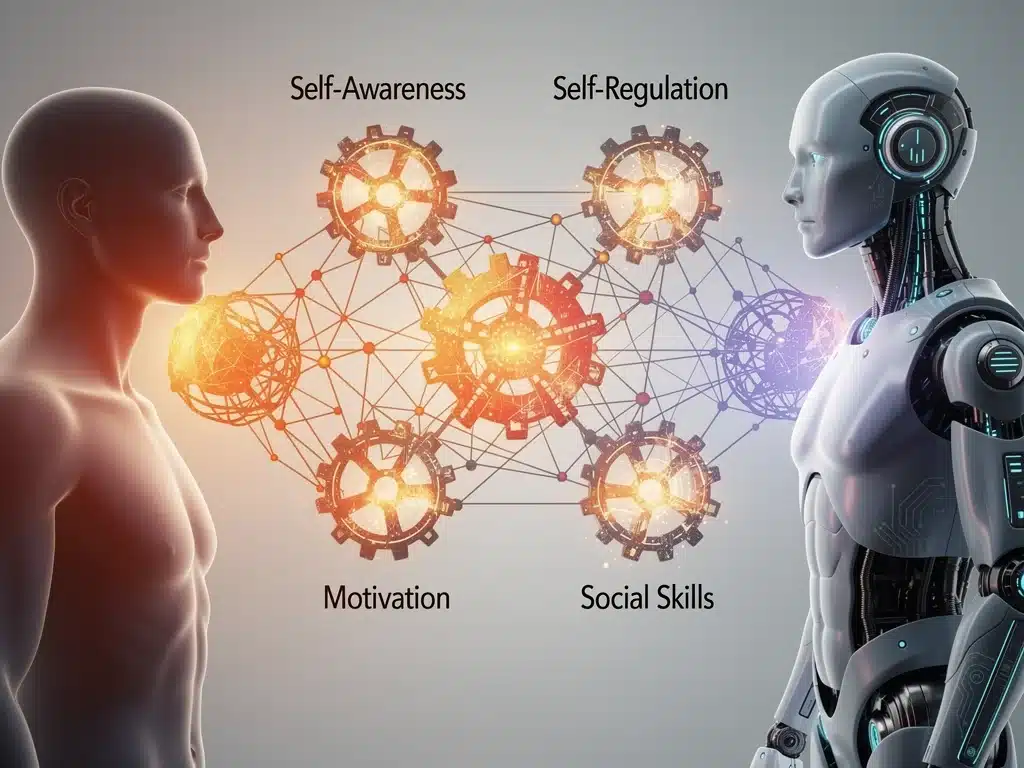
Why EQ is Crucial for AI-Driven Workflows
Emotional intelligence ensures that human interactions with AI are productive and ethically sound.
It allows professionals to navigate the complexities of AI-generated insights, providing the necessary human judgment to contextualize data and prevent unintended consequences. This critical oversight prevents AI from operating in a vacuum, detached from real-world implications.
Without a strong foundation in emotional intelligence, the potential for misunderstandings, biases, and even societal harm from AI systems increases significantly.
Professionals with high EQ can identify and mitigate these risks, championing responsible AI deployment. This makes human-AI collaboration emotional intelligence an imperative.
Furthermore, emotional intelligence fosters a collaborative spirit, encouraging teams to leverage AI as an assistant rather than a replacement.
This perspective promotes innovation and allows humans to focus on higher-level strategic tasks that require creativity and empathy. The harmonious integration of human and artificial capabilities is the ultimate goal.
- Interpreting AI Outputs: Emotional intelligence helps contextualize AI-generated data, preventing misinterpretation and ensuring human values are considered.
- Ethical AI Development: Empathy and self-awareness guide the creation of AI systems that are fair, transparent, and beneficial to society.
- Change Management: Social skills and self-regulation facilitate smoother transitions and adoption of AI tools within teams.
- Problem-Solving: Combining human intuition and emotional understanding with AI’s analytical power leads to more comprehensive solutions.
The 2026 Outlook: Emotional Intelligence as a Top U.S. Job Skill
By 2026, projections indicate that emotional intelligence will not just be a desirable trait but a mandatory skill for a vast array of U.S. job roles.
This shift is driven by the increasing sophistication of AI and the corresponding need for humans to manage, guide, and collaborate with these advanced systems effectively. The demand for human-AI collaboration emotional intelligence is accelerating.
Industries spanning healthcare, finance, customer service, and creative arts are all experiencing this transformation.
Employers are actively seeking candidates who can demonstrate strong emotional intelligence alongside technical proficiency, recognizing that the former is essential for maximizing the benefits of the latter. This reflects a growing understanding of holistic employee value.
Reports from leading research institutions and industry bodies consistently highlight EQ as a critical future skill.
This consensus underscores a fundamental change in workforce requirements, moving beyond purely technical competencies. The time to invest in developing emotional intelligence is now, to meet the impending demand.
Sectors Prioritizing EQ for AI Integration
Several key sectors are at the forefront of recognizing and prioritizing emotional intelligence for effective human-AI collaboration.
In healthcare, for instance, AI assists with diagnostics and treatment plans, but human empathy remains crucial for patient care and communication. The ability to convey compassion and build trust is irreplaceable, even with AI support.
Similarly, in customer service, AI-powered chatbots handle routine inquiries, yet complex customer issues often require human agents with high emotional intelligence to de-escalate situations and provide personalized solutions.
The human touch, guided by EQ, transforms a transactional interaction into a positive experience, leveraging human-AI collaboration emotional intelligence.
Even in highly technical fields like software development and data science, teamwork, conflict resolution, and leadership all benefit immensely from emotional intelligence.
These skills are vital for cross-functional collaboration, especially when integrating AI components into larger projects. The need for human-AI collaboration emotional intelligence is universal.
Navigating the Future: Upskilling and Reskilling for Human-AI Collaboration
The imperative to develop emotional intelligence for the AI-driven future presents both challenges and opportunities for the U.S. workforce.
Upskilling and reskilling initiatives are becoming crucial for individuals to remain competitive and for organizations to foster a resilient and adaptable talent pool. This proactive approach is essential in a rapidly evolving job market.
Educational institutions and corporate training programs are beginning to integrate emotional intelligence development alongside technical AI training.
This holistic approach prepares professionals not just to operate AI tools, but to thrive in environments where human and artificial intelligence coexist. The focus is on creating a symbiotic relationship.
For individuals, this means actively seeking out opportunities to enhance their EQ through workshops, mentorship, and self-reflection.
For employers, it involves creating a culture that values and cultivates emotional intelligence, recognizing its direct impact on productivity, innovation, and employee well-being. Investing in human-AI collaboration emotional intelligence is a strategic move.

Strategies for Enhancing Emotional Intelligence
Developing emotional intelligence is a continuous process that involves self-awareness, practice, and feedback. Individuals can start by engaging in self-reflection to understand their own emotional triggers and responses.
Mindfulness practices, such as meditation, can also significantly improve self-awareness and self-regulation, which are foundational EQ components.
Furthermore, actively listening to others, practicing empathy by trying to understand different perspectives, and seeking constructive feedback are powerful ways to enhance social skills.
Participating in team projects, leadership roles, and mentorship programs provides real-world opportunities to apply and refine these abilities. These are crucial for human-AI collaboration emotional intelligence.
Organizations can support this development by offering specialized training programs, promoting a culture of open communication, and integrating EQ assessments into performance reviews.
Creating psychological safety within teams encourages individuals to express emotions constructively and learn from interpersonal challenges. This fosters an environment conducive to human-AI collaboration emotional intelligence.
- Self-Reflection: Regularly assess personal emotional responses and triggers to build self-awareness.
- Active Listening: Pay full attention to others, seeking to understand their perspectives and feelings without interruption.
- Empathy Practice: Deliberately try to understand situations from another person’s point of view.
- Feedback Seeking: Actively solicit constructive criticism to identify areas for improvement in interpersonal skills.
The Role of Leadership in Fostering Human-AI Collaboration
Effective leadership is paramount in successfully integrating AI while simultaneously championing emotional intelligence within an organization.
Leaders must not only understand the technical capabilities of AI but also possess the emotional acumen to guide their teams through significant technological and cultural shifts. Their ability to inspire trust and manage anxieties is critical.
Leaders set the tone for how human-AI collaboration is perceived and implemented. By demonstrating high emotional intelligence themselves, they create a workplace culture where empathy, open communication, and adaptability are valued.
This leadership approach mitigates resistance to change and maximizes the benefits of AI adoption across all levels.
Moreover, emotionally intelligent leaders can effectively mediate between human and AI capabilities, ensuring that technology serves human objectives rather than dictating them.
They are crucial in defining ethical guidelines for AI use and ensuring that human well-being remains at the core of all technological advancements. This proactive leadership is essential for human-AI collaboration emotional intelligence.
Ethical Considerations and the Human Element in AI Development
As AI systems become more autonomous and influential, ethical considerations move to the forefront of development and deployment. The human element, particularly emotional intelligence, plays an irreplaceable role in navigating these complex ethical landscapes.
Ensuring AI systems are fair, transparent, and accountable requires a deep understanding of human values and societal impact.
Professionals with high emotional intelligence are better equipped to anticipate potential biases in AI algorithms, understand the societal implications of automated decisions, and advocate for ethical safeguards.
Their ability to empathize with diverse user groups helps in designing AI that is inclusive and beneficial for all, not just a select few. This is a critical aspect of human-AI collaboration emotional intelligence.
This includes developing AI with a ‘human-in-the-loop’ approach, where human oversight and judgment are integrated at crucial decision points.
Emotional intelligence ensures that these human interventions are informed by a comprehensive understanding of context, ethics, and potential consequences. The responsible development of AI is intrinsically linked to human emotional and moral capacity.
Measuring and Cultivating Emotional Intelligence in the Workplace
As emotional intelligence gains recognition as a vital skill for human-AI collaboration, organizations are exploring effective methods for measuring and cultivating it within their workforce.
Standardized assessments, behavioral interviews, and 360-degree feedback are becoming common tools to evaluate an individual’s EQ levels. These metrics provide valuable insights into current capabilities and areas for development.
Beyond measurement, creating a culture that actively fosters emotional intelligence is key. This involves implementing targeted training programs that focus on empathy, conflict resolution, and effective communication.
Mentorship programs and leadership development initiatives also play a significant role in nurturing these essential human skills.
Ultimately, the goal is to integrate emotional intelligence into the organizational DNA, recognizing it as a strategic asset for navigating the complexities of the AI era.
By systematically measuring and cultivating EQ, companies can ensure their workforce is prepared for the demands of human-AI collaboration emotional intelligence.
| Key Skill | Impact on Human-AI Collaboration |
|---|---|
| Empathy | Ensures AI solutions are user-centric and considerate of diverse human needs. |
| Self-Awareness | Helps individuals understand their biases when interacting with AI outputs. |
| Social Skills | Facilitates smooth team dynamics and communication in AI-augmented teams. |
| Ethical Judgment | Guides responsible AI development and deployment decisions. |
Frequently Asked Questions About Human-AI Collaboration and Emotional Intelligence
Emotional intelligence is crucial because AI excels at data processing but lacks human context, empathy, and ethical reasoning. EQ enables humans to guide AI, interpret its outputs responsibly, and ensure technology serves human values, making human-AI collaboration more effective and humane.
High EQ fosters better communication and understanding among human team members, especially when integrating AI tools. It helps manage anxieties about AI, builds trust, and ensures that human insights complement AI’s analytical power, leading to more cohesive and innovative outcomes in human-AI collaboration.
Empathy, self-awareness, and social skills are particularly valuable. Empathy helps design user-centric AI; self-awareness mitigates human biases in AI interaction; and social skills facilitate effective communication and conflict resolution within human-AI teams, essential for seamless human-AI collaboration.
Yes, by 2026, emotional intelligence is projected to be a top U.S. job skill. Employers increasingly recognize that technical proficiency alone is insufficient. They require professionals who can ethically and effectively navigate AI integration, making human-AI collaboration emotional intelligence a hiring priority.
Professionals can enhance EQ through self-reflection, mindfulness, active listening, and seeking feedback. Participating in workshops, mentorship, and team-based projects also provides practical opportunities to cultivate empathy and social skills, strengthening their readiness for human-AI collaboration emotional intelligence.
What This Means for the U.S. Workforce
The increasing emphasis on human-AI collaboration emotional intelligence signals a pivotal moment for the U.S. job market. This shift means that traditional technical skills, while still important, must now be augmented by a robust emotional toolkit.
For individuals, this is a clear call to action: invest in developing your emotional quotient to remain competitive and relevant in an AI-driven economy.
For organizations, it underscores the need to integrate EQ training into talent development strategies and foster a culture that values human-centric approaches to technology.
The coming years will see those who master human-AI collaboration emotional intelligence emerge as leaders and innovators. This isn’t just about adapting to change; it’s about shaping the future of work with purpose and empathy.
