U.S. Industries: Cyber-Physical Systems Expertise by 2026

The line between the digital and physical worlds has officially blurred, spark-plugging a massive demand for U.S. Industries Cyber-Physical Systems expertise.
As automation and interconnected networks redefine how America builds, moves, and powers things, a quiet revolution is reshaping our workforce.
By 2026, four key economic sectors will face a critical make-or-break moment, requiring an entirely new playbook of hybrid tech skills. To stay competitive, businesses and professionals must rapidly adapt to this wave of intelligent machines and advanced cognitive computing.
This brief analysis cuts through the noise to deliver a direct, factual roadmap of the automated future. Discover the major industrial shifts on the horizon and what you need to know right now to stay ahead of the curve.
Manufacturing: The Smart Factory Revolution
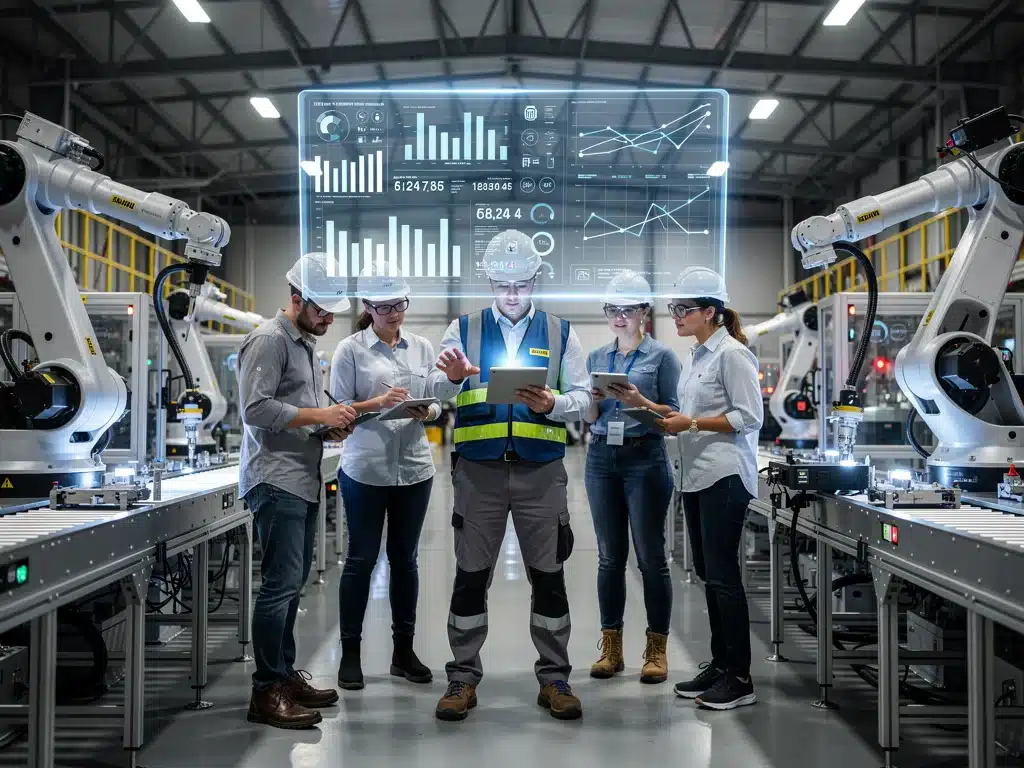
The manufacturing sector stands at the forefront of the cyber-physical revolution, rapidly transitioning towards ‘smart factories’ where production processes are highly automated and interconnected.
This transformation is driven by the need for increased efficiency, customization, and resilience in supply chains.
As traditional assembly lines give way to adaptive, data-driven operations, the demand for specialists who can manage complex industrial control systems, robotics, and predictive maintenance platforms is skyrocketing.
The shift impacts everything from product design to logistics, requiring a holistic understanding of both physical machinery and digital infrastructure.
The integration of CPS in manufacturing promises not only enhanced productivity but also improved safety and reduced operational costs. However, realizing these benefits hinges entirely on the availability of a skilled workforce capable of overseeing these sophisticated systems.
Automation and Robotics Integration
The widespread adoption of automation and advanced robotics is a cornerstone of modern manufacturing. These systems, ranging from collaborative robots (cobots) to fully autonomous production lines, are at the heart of the smart factory concept.
Professionals are needed to program, maintain, and troubleshoot these complex robotic systems, ensuring their seamless integration with other operational technologies.
Expertise in areas like machine learning for predictive maintenance and real-time data analysis for process optimization is becoming indispensable for the U.S. Industries Cyber-Physical Systems landscape.
- Robotics engineering and programming
- Industrial IoT (IIoT) platform management
- Data analytics for operational efficiency
- Cybersecurity for industrial control systems (ICS)
Supply Chain Digitization and Optimization
Beyond the factory floor, CPS is revolutionizing supply chain management. Digital twins, blockchain, and advanced analytics are enabling greater transparency, traceability, and optimization across the entire supply chain, from raw materials to final product delivery.
This requires experts who can design and implement digital supply chain solutions, leveraging data from physical assets to predict disruptions, optimize routes, and manage inventory more effectively.
The focus is on creating resilient and agile supply networks, critical for navigating global economic uncertainties and enhancing the overall efficiency of U.S. Industries Cyber-Physical Systems.
The manufacturing sector’s embrace of cyber-physical systems signifies a fundamental shift in how goods are produced and delivered.
This evolution demands a workforce that is not only technically proficient but also adept at interdisciplinary problem-solving, bridging the gap between IT and operational technology (OT).
Energy and Utilities: Modernizing Critical Infrastructure
The energy and utilities sector is another critical area experiencing a profound transformation due to cyber-physical systems. Modernizing aging infrastructure, integrating renewable energy sources, and enhancing grid resilience all rely heavily on advanced CPS technologies.
Smart grids, for instance, utilize sensors, communication networks, and control systems to optimize energy distribution, detect outages, and manage demand response in real time.
This intricate web of interconnected systems requires specialized expertise for both operational efficiency and robust cybersecurity.
The stakes are particularly high in this sector, as disruptions can have widespread economic and social consequences. Therefore, ensuring a skilled workforce capable of managing these complex, often geographically dispersed, systems is paramount for national security and public welfare.
Smart Grid Technologies and Renewable Integration
The transition to smart grids is accelerating, driven by the need to integrate diverse energy sources, including solar and wind power, more efficiently. These grids rely on sophisticated CPS to monitor, control, and optimize energy flow, ensuring stability and reliability.
Professionals with expertise in power systems engineering, SCADA (Supervisory Control and Data Acquisition) systems, and distributed energy resource management are in high demand.
The ability to manage real-time data from millions of sensors and actuators is crucial for maintaining grid stability and integrating new technologies effectively within U.S. Industries Cyber-Physical Systems.
- Energy management systems (EMS) development
- Distributed ledger technologies for energy trading
- Cybersecurity for critical infrastructure
- Predictive analytics for grid maintenance
Cybersecurity for Critical Infrastructure
Given the critical nature of energy infrastructure, cybersecurity is not just a concern but a foundational requirement for all CPS implementations. Protecting these systems from sophisticated cyber threats is a continuous and evolving challenge, demanding highly specialized expertise.
Experts are needed to design secure architectures, implement intrusion detection systems, and develop incident response protocols specific to operational technology environments.
The convergence of IT and OT security is creating new roles and a significant demand for professionals who understand the unique vulnerabilities of industrial control systems within U.S. Industries Cyber-Physical Systems.
The energy sector’s reliance on CPS means that workforce development must prioritize both technical proficiency in system operation and an unwavering focus on cybersecurity. This dual emphasis ensures both the efficiency and the resilience of the nation’s energy supply.
Healthcare: Precision Medicine and Smart Hospitals
The healthcare industry is undergoing a digital revolution, with cyber-physical systems playing a transformative role in everything from patient care to hospital management. This includes the rise of precision medicine, smart hospitals, and advanced medical devices.
Connected medical devices, remote patient monitoring systems, and AI-powered diagnostics are generating vast amounts of data that, when integrated, can lead to more personalized and effective treatments.
This shift demands professionals who can manage, analyze, and secure these complex data flows and interconnected devices.
The goal is to enhance patient outcomes, improve operational efficiency, and reduce healthcare costs through intelligent automation and data-driven insights.
However, the sensitive nature of patient data and the criticality of medical systems underscore the need for impeccable expertise in this domain.
Connected Health and Medical IoT
The proliferation of medical IoT devices, from wearable sensors to smart implantables, is transforming how patient health is monitored and managed. These devices collect continuous data, enabling remote care, early detection of health issues, and personalized treatment plans.
Professionals are required to develop, integrate, and maintain these connected health ecosystems, ensuring data accuracy, interoperability, and regulatory compliance.
Expertise in secure data transmission, cloud computing, and AI for diagnostic support is becoming indispensable for advancing U.S. Industries Cyber-Physical Systems in healthcare.
- Medical device integration and management
- Telemedicine platform development
- Data privacy and HIPAA compliance
- AI/ML for medical diagnostics
Smart Hospital Operations and Robotics
Hospitals are increasingly adopting CPS to optimize operations, from automated logistics and surgical robotics to intelligent building management systems. These technologies aim to improve patient experience, streamline workflows, and enhance safety.
This requires experts who can implement and manage robotic surgical systems, automate pharmacy operations, and integrate various hospital systems into a cohesive, intelligent infrastructure.
The demand for professionals skilled in both medical technology and IT solutions is growing rapidly as hospitals become more digitally integrated and reliant on U.S. Industries Cyber-Physical Systems.
The healthcare sector’s adoption of CPS is driving a need for interdisciplinary professionals who can bridge the gap between clinical practice, engineering, and information technology. This convergence is essential for realizing the full potential of smart healthcare solutions.
Transportation and Logistics: Autonomous Systems and Smart Cities
Innovations in transportation and logistics are heavily reliant on cyber-physical systems, leading to the development of autonomous vehicles, smart traffic management, and optimized supply chain networks.
These advancements promise safer, more efficient, and sustainable mobility solutions.
From self-driving cars and drones to intelligent freight management and smart ports, CPS is transforming how people and goods move. This intricate ecosystem requires a workforce adept at handling complex sensor data, real-time communication, and robust control algorithms.
The vision of smart cities, where transportation networks are seamlessly integrated with urban infrastructure, further amplifies the need for specialized expertise. Ensuring the security and reliability of these interconnected systems is paramount for public safety and economic fluidity.
Autonomous Vehicles and Drones
The development and deployment of autonomous vehicles (AVs) and drones are at the forefront of CPS innovation in transportation. These systems combine advanced sensors, AI, and sophisticated control algorithms to navigate complex environments.
Professionals are needed to design, test, and validate the safety and reliability of AV software and hardware, as well as to manage the regulatory and ethical considerations.
Expertise in computer vision, machine learning for perception, and secure communication protocols is critical for advancing U.S. Industries Cyber-Physical Systems in this domain.
- Autonomous driving software development
- Sensor fusion and perception systems
- Vehicle-to-everything (V2X) communication
- Safety and regulatory compliance for AVs

Smart Traffic Management and Logistics
Beyond individual vehicles, CPS is enabling smart traffic management systems that optimize urban mobility, reduce congestion, and enhance safety. These systems use real-time data from sensors and cameras to dynamically adjust traffic signals and provide route guidance.
In logistics, CPS optimizes freight movement, warehouse operations, and last-mile delivery through intelligent routing and automation.
This requires experts who can develop and deploy intelligent transportation systems (ITS) and sophisticated logistics platforms, leveraging data analytics and AI for operational efficiency within U.S. Industries Cyber-Physical Systems.
The convergence of physical infrastructure with digital intelligence in transportation and logistics creates a pressing demand for professionals who can design, implement, and maintain these complex, interconnected systems.
This is essential for building the smart cities and efficient supply chains of the future.
Cross-Cutting Skills for the CPS Workforce
While specific industries have distinct needs, there are several cross-cutting skills that are universally critical for professionals working with cyber-physical systems. These competencies form the foundation for success in any of the aforementioned sectors.
A strong grasp of cybersecurity principles is non-negotiable, given the inherent vulnerabilities of interconnected systems. Similarly, data analytics and artificial intelligence are crucial for extracting actionable insights from the vast amounts of data generated by CPS.
Furthermore, interdisciplinary collaboration and problem-solving abilities are essential, as CPS projects often involve diverse teams of engineers, IT specialists, and domain experts. These foundational skills are vital for the continued growth of U.S. Industries Cyber-Physical Systems.
Cybersecurity as a Foundational Skill
The interconnected nature of CPS means that cybersecurity is not an add-on but an integral part of system design and operation. Protecting these systems from cyber threats is paramount, especially in critical infrastructure and sensitive data environments.
Professionals across all CPS-related roles must possess a deep understanding of cyber threats, vulnerabilities, and mitigation strategies.
This includes expertise in network security, industrial control system security, data encryption, and incident response protocols, which are all critical for securing U.S. Industries Cyber-Physical Systems.
This foundational understanding ensures that systems are designed with security in mind from the outset, minimizing risks and building resilience against potential attacks. Continuous learning in cybersecurity is a must for anyone in this field.
Data Analytics and Artificial Intelligence
Cyber-physical systems generate enormous volumes of data, from sensor readings to operational logs. The ability to collect, process, analyze, and interpret this data is crucial for optimizing system performance, predicting failures, and making informed decisions.
Expertise in data analytics, machine learning, and artificial intelligence is therefore highly sought after.
These skills enable predictive maintenance, anomaly detection, process optimization, and the development of intelligent automation solutions, driving efficiency across all U.S. Industries Cyber-Physical Systems.
- Statistical modeling and data visualization
- Machine learning algorithm development
- Big data platforms and tools
- AI ethics and explainability
The demand for these cross-cutting skills highlights the need for educational programs and training initiatives that adopt an interdisciplinary approach. Preparing the workforce for CPS requires a blend of traditional engineering, computer science, and specialized domain knowledge.
Educational and Training Imperatives
Addressing the growing demand for U.S. Industries Cyber-Physical Systems expertise requires a concerted effort from educational institutions, industry, and government.
Developing robust pipelines of skilled professionals is crucial for maintaining competitive advantage and fostering innovation.
Universities and technical colleges must adapt their curricula to include more interdisciplinary programs that combine engineering, computer science, and domain-specific knowledge. Emphasis should be placed on hands-on experience and practical application of CPS principles.
Industry partnerships are also vital, enabling students to gain real-world experience and ensuring that educational programs align with current industry needs.
Continuous professional development and reskilling initiatives for the existing workforce are equally important to bridge the skills gap.
Rethinking Curricula and Interdisciplinary Programs
Traditional academic silos are no longer sufficient to prepare students for the complexities of cyber-physical systems.
Educational institutions must develop interdisciplinary programs that integrate mechanical, electrical, and software engineering with computer science, data analytics, and cybersecurity.
These programs should emphasize project-based learning and hands-on experience with CPS technologies, such as robotics, IoT devices, and industrial control systems.
The goal is to produce graduates with a holistic understanding of how physical and digital components interact within U.S. Industries Cyber-Physical Systems.
By fostering a more integrated approach to education, institutions can better equip the next generation of professionals with the diverse skill sets required to excel in these rapidly evolving fields. This adaptation is critical for meeting future workforce demands.
Industry-Academia Collaboration and Apprenticeships
Strong collaboration between industry and academia is essential for ensuring that the workforce development efforts are aligned with actual industry needs. This includes joint research projects, guest lectures by industry experts, and co-developed curriculum modules.
Apprenticeship programs and internships offer invaluable opportunities for students to gain practical experience and for companies to identify and nurture future talent.
These partnerships can help bridge the gap between theoretical knowledge and practical application, crucial for developing expertise in U.S. Industries Cyber-Physical Systems.
- Joint research and development initiatives
- Internship and co-op programs
- Customized corporate training programs
- Certification pathways for specialized CPS skills
These collaborative models ensure that educational outcomes are directly relevant to the demands of the modern industrial landscape, providing a steady supply of highly skilled professionals ready to contribute to the advancement of cyber-physical systems.
Government Initiatives and Policy Support
Government plays a crucial role in fostering the growth of U.S. Industries Cyber-Physical Systems expertise through strategic investments, policy development, and regulatory frameworks.
Support for research and development, workforce training programs, and the establishment of common standards are all vital.
Funding for advanced research in CPS technologies helps drive innovation and keeps the U.S. at the forefront of technological development. Policies that encourage public-private partnerships can accelerate the deployment of new CPS solutions across critical sectors.
Furthermore, developing clear regulatory guidelines and cybersecurity standards for CPS is essential for ensuring safety, reliability, and public trust.
These governmental efforts create an enabling environment for the sustained growth of the CPS workforce and the widespread adoption of these transformative technologies.
Funding for Research and Development
Government investment in R&D for cyber-physical systems is critical for pushing the boundaries of what is possible. This includes funding for universities, national labs, and private companies working on foundational CPS technologies, from advanced sensors to AI algorithms for control systems.
Such investments not only lead to technological breakthroughs but also help cultivate a vibrant ecosystem of researchers and engineers.
This fosters an environment where innovation thrives, directly supporting the development of expertise in U.S. Industries Cyber-Physical Systems.
Strategic allocation of research funds can target specific industry challenges, ensuring that scientific advancements are directly applicable to real-world problems and contribute to national economic and security objectives.
Workforce Development Programs and Standards
Government-backed workforce development programs are essential for upskilling the current labor force and training new professionals in CPS-related fields.
This can include grants for educational institutions, vocational training programs, and initiatives to promote STEM education.
Establishing common standards and best practices for the design, deployment, and security of cyber-physical systems is also a key governmental function.
These standards ensure interoperability, enhance security, and provide a framework for quality assurance across all U.S. Industries Cyber-Physical Systems.
- National initiatives for STEM education
- Grants for CPS-focused vocational training
- Development of industry-wide CPS standards
- Public awareness campaigns on future skills
By actively supporting both the development of new technologies and the cultivation of a skilled workforce, government policies can significantly accelerate the adoption and successful implementation of cyber-physical systems across the nation, ensuring long-term prosperity and security.
| Key Industry | Expertise Required |
|---|---|
| Manufacturing | Smart factory automation, IIoT, industrial cybersecurity. |
| Energy & Utilities | Smart grid management, critical infrastructure cybersecurity. |
| Healthcare | Connected health devices, medical IoT, data privacy. |
| Transportation & Logistics | Autonomous systems, smart traffic, supply chain optimization. |
Frequently Asked Questions About Cyber-Physical Systems Expertise
The top four U.S. industries most affected are Manufacturing, Energy and Utilities, Healthcare, and Transportation and Logistics. These sectors are undergoing significant transformations driven by the integration of digital computation with physical processes, leading to increased automation and data reliance. This impacts operational efficiency and workforce demands.
Critical skills include cybersecurity for industrial control systems, data analytics, artificial intelligence, robotics engineering, and knowledge of Industrial IoT (IIoT). Professionals also need strong interdisciplinary problem-solving abilities to bridge IT and operational technology domains, crucial for the evolving U.S. Industries Cyber-Physical Systems landscape.
Educational institutions are developing interdisciplinary programs that combine engineering, computer science, and domain-specific knowledge. They are emphasizing hands-on training, project-based learning, and industry partnerships to align curricula with current industry needs. This proactive approach aims to prepare a skilled workforce for U.S. Industries Cyber-Physical Systems.
Cybersecurity is a foundational and non-negotiable aspect of cyber-physical systems. Protecting these interconnected systems from threats is paramount, especially in critical infrastructure. Expertise in network security, industrial control system security, and incident response is vital to ensure the safety and reliability of all U.S. Industries Cyber-Physical Systems deployments.
The long-term implications include enhanced national competitiveness, improved operational efficiency, and increased societal benefits across various sectors. However, it also demands continuous adaptation in workforce skills, robust regulatory frameworks, and sustained investment in research and development to fully harness the potential of U.S. Industries Cyber-Physical Systems.
Looking Ahead
The imperative for enhanced U.S. Industries Cyber-Physical Systems expertise by 2026 represents a pivotal moment for America’s economic and technological future.
The identified industries – manufacturing, energy, healthcare, and transportation – are not merely adopting new technologies but are fundamentally redefining their operational paradigms.
This transformation underscores the urgent need for a skilled workforce capable of navigating the complexities of integrated digital and physical environments.
Understanding these evolving demands is crucial for individuals planning their career paths, educational institutions designing curricula, and businesses strategizing for future growth.
The convergence of IT and OT necessitates a holistic approach to skill development, emphasizing interdisciplinary knowledge, cybersecurity, and data literacy. As these systems become more prevalent, the ability to innovate and secure them will be a key differentiator.
Moving forward, sustained collaboration between government, academia, and industry will be vital to close the existing skills gap and foster a robust ecosystem for cyber-physical systems innovation.
Investing in continuous learning, specialized training, and cutting-edge research will ensure the U.S. remains a leader in these transformative technologies, securing both economic prosperity and national resilience.
