Circular Economy Principles: How 4 US Industries Are Adopting Them for 2026 Growth
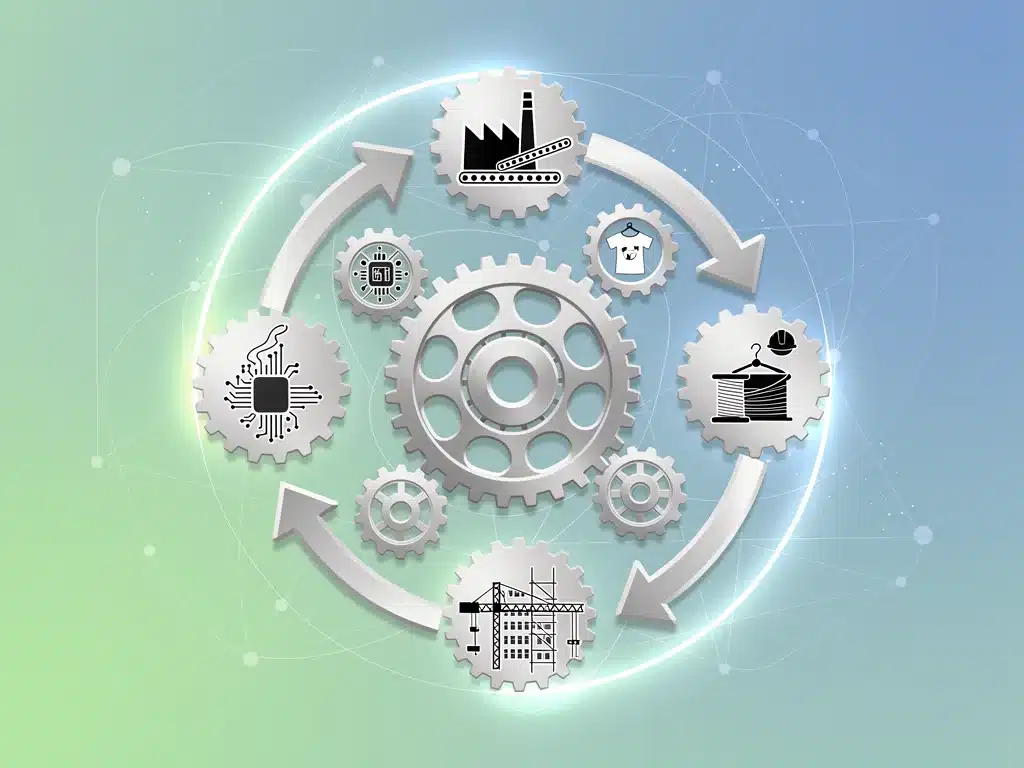
The linear model of “take, make, waste” is rapidly giving way to a smarter, closed-loop approach—making Circular Economy Principles the ultimate playbook for sustainable growth in 2026.
Across the United States, forward-thinking sectors are abandoning throwaway practices to keep resources in high-value rotation.
By re-engineering entire product lifecycles, these market leaders are proving that environmental stewardship directly fuels financial resilience and supply chain stability.
Here is how four major American industries are transforming their operational blueprints, cutting waste, and unlocking powerful new revenue streams for the years ahead.
The Imperative of Circularity in the US Economy
The United States faces mounting pressures from resource depletion, volatile supply chains, and increasing waste generation, making the transition to a circular economy not just beneficial but essential.
Traditional linear economic models are proving unsustainable in the face of global environmental challenges and economic uncertainties. The shift towards circularity offers a robust solution to these complex issues.
Embracing Circular Economy Principles provides a pathway for industries to mitigate risks, enhance efficiency, and foster innovation. This approach encourages businesses to rethink their entire value chain, from raw material sourcing to end-of-life product management.
The economic advantages, such as reduced material costs and new market opportunities, are becoming increasingly evident.
Furthermore, consumer demand for sustainable products and ethical business practices is growing, pushing companies to adopt more responsible production and consumption models.
Government policies and incentives are also beginning to support this transition, creating a more favorable environment for circular economy initiatives. The collective movement towards circularity is poised to reshape the US industrial landscape significantly.
Manufacturing Sector: Redefining Production and Product Lifecycles
The US manufacturing sector is undergoing a profound transformation, moving away from mass production of disposable goods towards durable, repairable, and recyclable products.
This shift is critical for reducing the vast amounts of waste generated by industrial processes and consumer goods. Manufacturers are now focusing on design for circularity, integrating sustainability from the initial concept phase.
Companies are investing in modular designs that allow for easy repair and component replacement, extending product lifespans significantly. The emphasis is also on using recycled content and renewable materials, reducing the reliance on virgin resources.
This approach not only lessens environmental impact but also creates more resilient supply chains, less susceptible to raw material price fluctuations.
Moreover, advanced manufacturing techniques, such as additive manufacturing (3D printing), are enabling on-demand production and reducing material waste.
The manufacturing sector’s adoption of Circular Economy Principles is setting a new standard for industrial sustainability, demonstrating that economic growth can be decoupled from resource depletion.
Design for Disassembly and Recyclability
A core tenet of circular manufacturing is designing products with their end-of-life in mind. This involves selecting materials that are easily separable and recyclable, avoiding complex composites that are difficult to break down.
Companies are also standardizing components to facilitate reuse and remanufacturing.
This proactive design approach ensures that products can re-enter the economic cycle as valuable resources, rather than ending up in landfills.
It requires collaboration across the supply chain, from material suppliers to product developers, to create truly circular systems. The benefits include reduced waste, lower material costs, and enhanced brand reputation.
Transition to Product-as-a-Service Models
Many manufacturers are exploring product-as-a-service (PaaS) models, where customers pay for the use of a product rather than its ownership.
This incentivizes manufacturers to design for durability and longevity, as they retain ownership and responsibility for maintenance and end-of-life management. Examples include lighting as a service or industrial equipment leasing.
- Reduces consumer waste by encouraging product return and refurbishment.
- Creates a continuous revenue stream for manufacturers.
- Fosters closer relationships between producers and consumers.
- Promotes efficient resource use through extended product lifecycles.
Electronics Industry: Tackling E-Waste with Innovative Solutions
The rapid obsolescence of electronic devices has made e-waste one of the fastest-growing waste streams globally, posing significant environmental and health challenges.
The US electronics industry is now at the forefront of implementing Circular Economy Principles to address this critical issue. Efforts are concentrated on extending device lifespans, improving repairability, and enhancing material recovery.
Companies are designing electronics with modular components that can be easily upgraded or replaced, reducing the need for consumers to purchase entirely new devices.
This approach not only minimizes waste but also offers consumers more flexible and cost-effective options. The ‘right to repair’ movement is also gaining momentum, pushing manufacturers to provide access to parts, tools, and repair information.
Investment in advanced recycling technologies is crucial for recovering valuable materials like rare earth elements and precious metals from discarded electronics.
These initiatives are transforming e-waste from a liability into a valuable resource, closing material loops and reducing the environmental footprint of the electronics sector. The industry’s commitment to circularity is vital for a sustainable digital future.
Advanced Recycling and Material Recovery
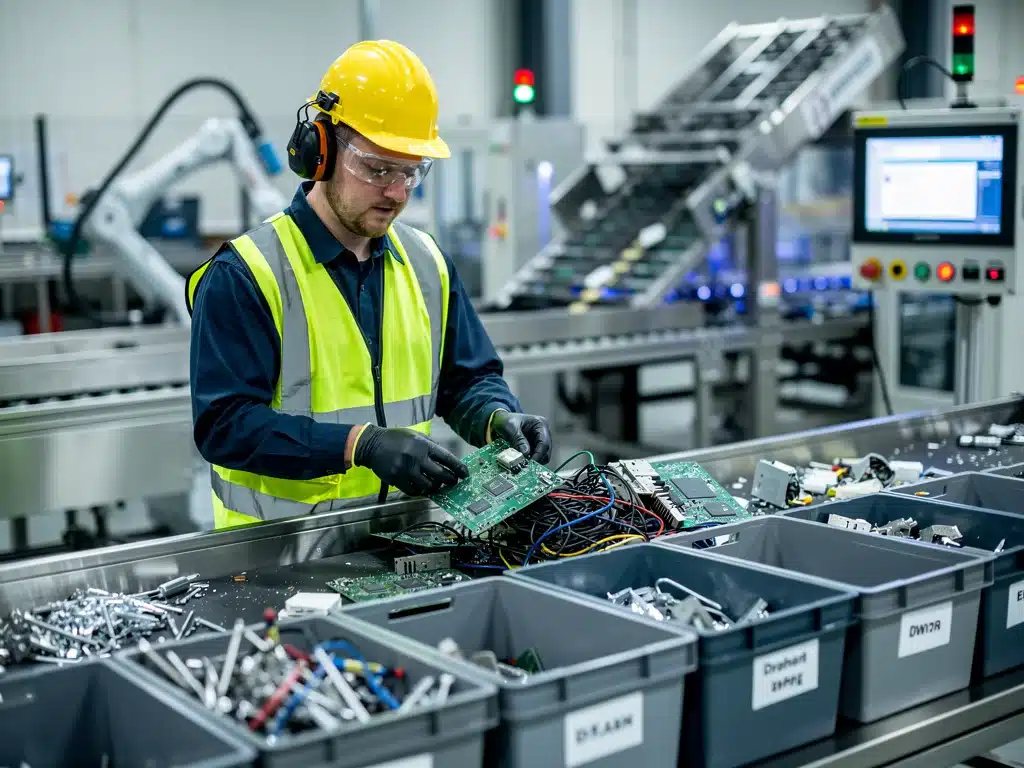
Recycling e-waste is a complex process due to the intricate mix of materials involved. However, significant advancements in sorting and extraction technologies are making it more efficient to recover critical raw materials.
Specialized facilities are now capable of separating various metals, plastics, and glass components with higher purity rates, allowing them to be reintroduced into the manufacturing process.
This focus on high-value material recovery reduces the need for virgin mining, which is often environmentally intensive.
The development of urban mining initiatives, where valuable materials are extracted from existing waste streams, is a key component of this circular strategy. Collaborations between tech companies and recycling firms are accelerating these innovations.
Device Take-Back and Refurbishment Programs
Many electronics companies are implementing take-back programs, allowing consumers to return old devices for proper recycling or refurbishment. These programs are essential for ensuring that products do not end up in landfills and that valuable components can be reused.
Refurbishment involves repairing and upgrading devices to extend their useful life, often reselling them at a lower price point.
- Provides affordable access to technology for a wider consumer base.
- Reduces the demand for new product manufacturing.
- Creates jobs in the repair and refurbishment sector.
- Minimizes environmental impact associated with new production.
Fashion and Apparel Industry: Sustainable Textiles and Closed Loops
The fashion industry, known for its rapid consumption cycles and significant environmental impact, is increasingly adopting Circular Economy Principles.
The focus is on creating sustainable textiles, extending garment life, and establishing closed-loop systems for material recovery. This shift aims to combat textile waste and reduce the industry’s carbon footprint.
Designers are prioritizing durability, timelessness, and versatility in clothing, moving away from fast fashion trends. The use of innovative, sustainable materials such as organic cotton, recycled polyester, and bio-based fibers is becoming more prevalent.
These materials often require fewer resources to produce and can be recycled more easily at the end of their life.
Furthermore, brands are exploring rental, resale, and repair services to keep garments in use for longer. Technologies for textile-to-textile recycling are also advancing, allowing old clothes to be broken down and regenerated into new fibers.
These initiatives are crucial for transforming the fashion industry into a more responsible and circular sector.
Innovative Sustainable Materials
The development and adoption of new sustainable materials are central to circular fashion. Researchers and companies are creating fabrics from unexpected sources, such as agricultural waste, algae, and even carbon emissions.
These innovations offer alternatives to traditional resource-intensive materials like conventional cotton and synthetic fibers derived from fossil fuels.
The goal is to create materials that are not only eco-friendly in their production but also durable, biodegradable, or easily recyclable at the end of their product life.
This includes developing blends that are easier to recycle and single-fiber garments. The push for material innovation is redefining what is possible in sustainable apparel.
Rental, Resale, and Repair Models
To extend the lifespan of garments and reduce consumption, the fashion industry is embracing business models centered around access over ownership.
Clothing rental services allow consumers to wear high-quality items for special occasions without purchasing them, while resale platforms facilitate the exchange of pre-owned clothing. Repair services are also gaining popularity, encouraging consumers to mend rather than discard.
These models not only reduce waste but also make fashion more accessible and affordable. They represent a significant shift in consumer behavior and industry practices, challenging the traditional linear model of buying new and discarding old.
Brands are actively investing in these services to meet evolving consumer demands for sustainability.
Construction and Demolition: Circular Building Materials and Urban Mining
The construction industry is a major consumer of raw materials and a significant generator of waste. Adopting Circular Economy Principles in this sector involves transforming how buildings are designed, constructed, and deconstructed.
The focus is on using circular building materials, minimizing waste during construction, and recovering materials from demolition for reuse.
Architects and engineers are increasingly designing buildings for deconstruction, ensuring that components can be easily disassembled and reused or recycled when the building reaches the end of its life.
This approach contrasts sharply with traditional demolition, which often results in vast amounts of mixed waste sent to landfills. Modular construction techniques also support circularity by allowing components to be fabricated off-site and reused.
Urban mining, the process of recovering valuable materials from existing buildings and infrastructure, is gaining traction. Concrete, steel, timber, and other materials are being salvaged and reprocessed for new construction projects.
This reduces the demand for virgin resources, lowers transportation costs, and minimizes the environmental impact of construction and demolition activities. The industry is moving towards a future where buildings are seen as material banks.
Building Design for Deconstruction
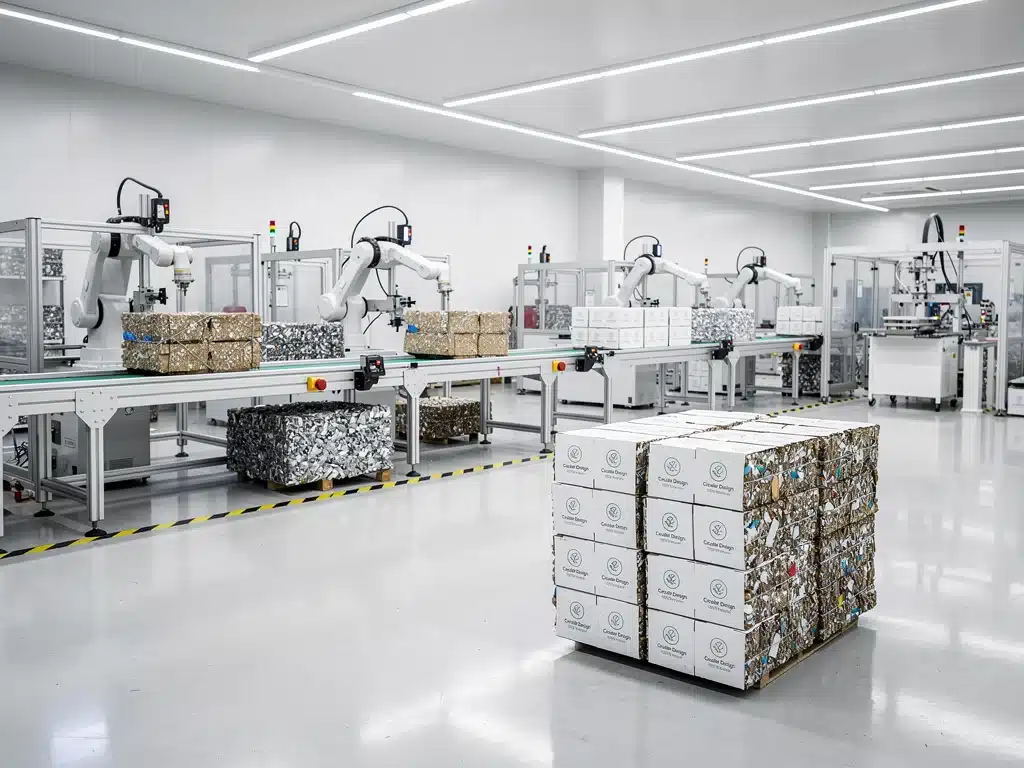
Designing for deconstruction means planning a building’s end-of-life from its inception. This includes using standardized components that are easy to unbolt or unclip, rather than permanently bonding them together.
Material passports, which document all materials used in a building, also facilitate future reuse and recycling by providing clear information on composition and location.
This approach ensures that buildings, when they are eventually taken down, become sources of valuable materials rather than waste.
It requires a collaborative effort between architects, material suppliers, and demolition experts to ensure that every element is considered for its potential second life. The long-term benefits include reduced waste and a more efficient use of resources.
Recycled and Low-Impact Construction Materials
The use of recycled content in construction materials is expanding rapidly. Recycled concrete aggregates, reclaimed timber, and recycled steel are becoming standard in many projects.
Additionally, the industry is exploring innovative low-impact materials, such as bio-based insulation, engineered wood products, and materials derived from industrial by-products like fly ash.
- Reduces the embodied carbon of new constructions.
- Decreases the demand for virgin natural resources.
- Diverts waste from landfills, creating a circular flow of materials.
- Supports local economies through material recovery and reprocessing.
| Key Industry | Circular Strategy |
|---|---|
| Manufacturing | Design for disassembly, product-as-a-service models. |
| Electronics | Advanced material recovery, device take-back programs. |
| Fashion | Sustainable materials, rental/resale/repair models. |
| Construction | Design for deconstruction, urban mining, recycled materials. |
Frequently Asked Questions About Circular Economy Principles in US Industries
Circular Economy Principles involve designing out waste and pollution, keeping products and materials in use, and regenerating natural systems. It’s a systemic approach to economic development designed to benefit businesses, society, and the environment. This contrasts with the traditional linear ‘take-make-dispose’ model.
US industries are adopting these principles due to resource scarcity, rising material costs, consumer demand for sustainability, and regulatory pressures. It offers opportunities for innovation, efficiency gains, new revenue streams, and enhanced brand reputation, contributing to long-term business resilience and growth towards 2026.
Challenges include the need for significant upfront investment in new technologies, redesigning supply chains, overcoming established linear business models, and developing new infrastructure for collection, sorting, and reprocessing. Consumer awareness and participation are also crucial for successful circular models to thrive.
Consumers benefit from more durable, repairable, and higher-quality products, often with extended warranties. Circular models like product-as-a-service or resale platforms can offer more affordable access to goods. It also leads to reduced environmental impact, contributing to a healthier planet for future generations.
Governments play a crucial role through policy incentives, grants for research and development, regulations that promote sustainable design and waste reduction, and investment in recycling infrastructure. They can also foster collaboration between industries and educate the public about the benefits of circular practices, accelerating the transition.
Looking Ahead: The Future of Circularity in US Industries
The proactive adoption of Circular Economy Principles signifies a fundamental shift in the US economic landscape. These efforts are not isolated initiatives but represent a growing movement towards a more resilient, sustainable, and innovative industrial future.
The lessons learned and innovations developed within these sectors will undoubtedly influence others, creating a ripple effect across the national economy.
Continued investment in research, supportive policy frameworks, and increased cross-industry collaboration will be crucial for accelerating this transition and realizing the full potential of a circular economy in the United States.
