$42 Billion Broadband Equity Rollout: What It Means for Underserved American Communities This Year
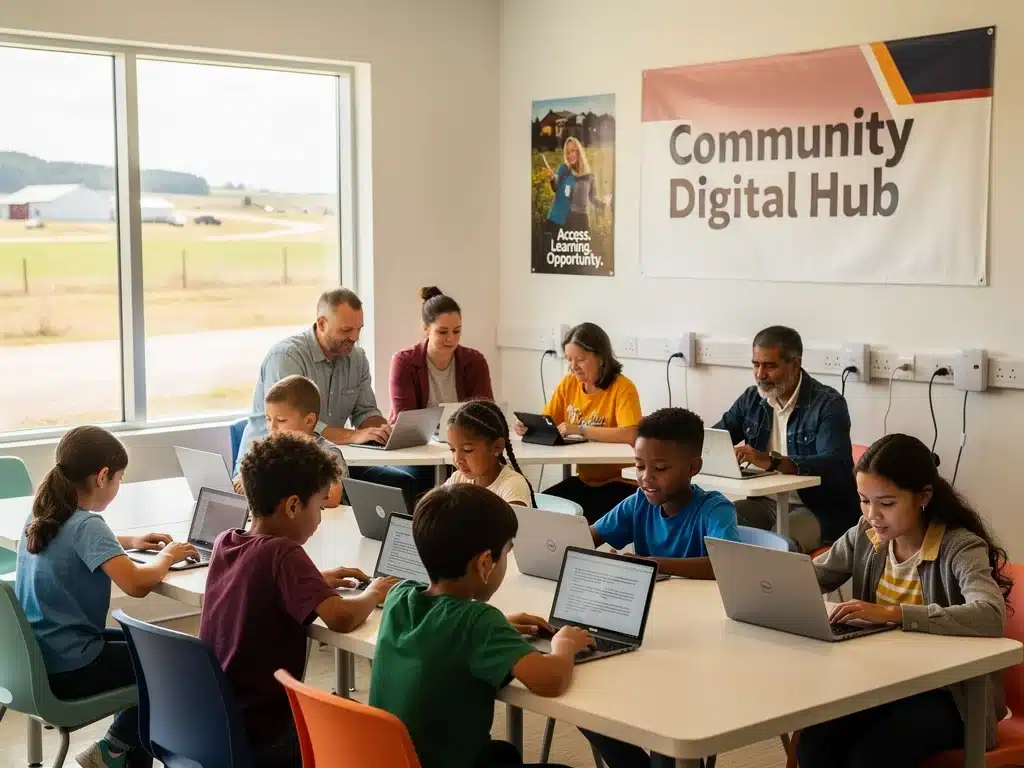
The historic Broadband Equity Rollout is deploying $42 billion in federal funding to eliminate the digital divide across underserved American regions. Delivering high-speed fiber networks to rural and low-income households ensures equitable access to essential online services nationwide.
Expanding high-capacity infrastructure transforms local economies by enabling seamless remote work, telehealth consultations, and digital education opportunities.
Strategic state-level grant distributions allow local internet service providers to construct reliable connectivity where commercial coverage previously lagged.
Closing these long-standing infrastructure gaps empowers millions of residents to fully participate in today’s digital economy. Let’s examine how state deployment schedules and network expansions are bringing gigabit speeds to neglected communities this year.
Understanding the $42 Billion Broadband Equity Rollout
The Broadband Equity Rollout focuses on expanding high-speed internet access to unserved and underserved areas. This massive federal undertaking is designed to ensure that all Americans have the opportunity to participate fully in the digital economy and society.
States and territories are currently developing their plans, outlining how they will allocate these funds to achieve widespread connectivity. The initial phases involve detailed mapping and identification of eligible areas, followed by proposals for infrastructure development.
The program emphasizes future-proof infrastructure, primarily fiber optic networks, to deliver reliable and fast internet speeds. This strategic approach ensures long-term benefits and resilience against future technological demands.
The BEAD Program’s Core Objectives
The BEAD program, central to the Broadband Equity Rollout, has clear objectives. It aims not only to build out infrastructure but also to foster affordability and digital literacy.
- Ensure universal access to reliable high-speed internet.
- Promote affordable broadband services for all households.
- Support digital literacy and device access for marginalized communities.
- Stimulate economic development through enhanced connectivity.
The goal is to create a comprehensive ecosystem where internet access is not just available but also usable and beneficial for everyone. This holistic approach addresses various facets of the digital divide.
Impact on Underserved American Communities
The Broadband Equity Rollout is set to dramatically reshape daily life in underserved American communities. Access to reliable internet opens doors to education, healthcare, and economic opportunities that were previously out of reach.
Rural areas, often characterized by vast distances and sparse populations, stand to gain significantly. These communities have historically lagged in broadband availability due to the high cost of infrastructure deployment.
Urban low-income neighborhoods, another key focus, will also see substantial improvements. The program aims to address both physical access and affordability barriers that disproportionately affect these populations.
Bridging the Digital Divide in Education
Improved internet access through the Broadband Equity Rollout will revolutionize educational opportunities. Students in underserved communities will gain equitable access to online learning resources, virtual classrooms, and educational software.
This means homework can be completed more easily, research can be conducted efficiently, and skills for the modern workforce can be developed. Schools and libraries are expected to play a crucial role as community hubs for digital learning.
The ability to connect reliably will also reduce the “homework gap,” where students without home internet struggle to keep up with their peers. This fosters a more level playing field for academic success.
State-by-State Allocation and Planning
Each state and territory received a specific allocation from the $42 Billion Broadband Equity Rollout funds, based on their identified needs. This individualized approach allows for tailored solutions to unique geographic and demographic challenges.
States are now in the process of submitting their initial proposals, detailing how they plan to use these funds. These plans undergo rigorous review by the National Telecommunications and Information Administration (NTIA) to ensure compliance and effectiveness.
Community engagement is a critical component of this planning phase, ensuring that local voices are heard and needs are accurately addressed. This collaborative effort helps prioritize projects that will have the most significant impact.
Key Milestones and Timelines
The implementation of the Broadband Equity Rollout follows a structured timeline. Initial proposals have been submitted, and many states are moving towards the challenge process, allowing stakeholders to dispute coverage maps.
Following the challenge process, final proposals will be approved, paving the way for the release of funds and the commencement of construction. This phased approach ensures transparency and accountability throughout the rollout.
Many projects are expected to break ground in late 2024 and throughout 2025, with significant progress anticipated over the next few years. The long-term vision is to achieve near-universal broadband coverage by the end of the decade.
Challenges and Opportunities in Implementation
Implementing the Broadband Equity Rollout is not without its challenges. Supply chain issues, workforce shortages, and complex permitting processes can slow down deployment.
Ensuring equitable access also means addressing issues beyond infrastructure, such as digital literacy and device affordability. These require complementary programs and community partnerships.
Despite these hurdles, the opportunities presented by this investment are immense. It’s a chance to fundamentally transform the digital landscape of the United States, fostering innovation and inclusion.
Overcoming Deployment Obstacles
To accelerate the Broadband Equity Rollout, states are exploring innovative solutions to deployment obstacles. This includes streamlining permitting processes and fostering public-private partnerships.
Workforce development programs are also being initiated to train skilled technicians and installers, addressing labor shortages. These efforts are crucial for maintaining momentum and achieving targets.
Furthermore, federal and state agencies are collaborating to share best practices and lessons learned, aiming to optimize the efficiency of the rollout. This cooperative spirit is vital for success.
Economic Implications and Job Creation
The Broadband Equity Rollout extends beyond connectivity; it is a significant economic stimulus. The construction and maintenance of new infrastructure will create thousands of jobs across the country.
These jobs range from skilled technicians and engineers to project managers and administrative staff. This influx of employment opportunities will provide a boost to local economies, particularly in rural areas.
Beyond direct job creation, enhanced broadband access fosters new businesses and expands existing ones. Small businesses can reach wider markets, and remote work opportunities become more viable, attracting new residents and investment.
Boosting Local Economies
The economic ripple effect of the Broadband Equity Rollout is substantial. Improved connectivity can increase property values, attract tech companies, and facilitate e-commerce for local merchants.
Farmers can leverage precision agriculture technologies, and healthcare providers can offer telehealth services more effectively. These advancements lead to increased productivity and better quality of life.
Ultimately, the investment aims to create sustainable economic growth in areas that have historically been left behind in the digital revolution. This represents a long-term commitment to prosperity.
Ensuring Digital Inclusion and Affordability
A core principle of the Broadband Equity Rollout is ensuring that internet access is not just available but also affordable for all. The BEAD program includes provisions to address the cost burden on low-income households.
Many states are integrating programs like the Affordable Connectivity Program (ACP) into their plans, which provides subsidies for internet service. This helps ensure that financial constraints do not prevent access.
Digital literacy initiatives are also crucial, empowering individuals with the skills to effectively use the internet for education, employment, and civic engagement. This holistic approach supports true digital inclusion.
The Role of Community Partnerships
Community organizations, non-profits, and local governments are vital partners in ensuring digital inclusion. They often serve as trusted intermediaries, helping residents navigate enrollment in affordability programs and providing digital skills training.
These partnerships ensure that the benefits of the Broadband Equity Rollout reach the most vulnerable populations. Local insights are invaluable in tailoring programs to specific community needs.
By working together, stakeholders can create a robust support system that maximizes the impact of federal investment. This collaborative model is essential for achieving lasting change.
Monitoring Progress and Accountability
Monitoring the progress of the Broadband Equity Rollout is crucial for accountability and ensuring funds are used effectively. The NTIA oversees the program, requiring regular reporting from states.
Performance metrics, such as the number of homes passed with fiber and the adoption rates of new services, will be tracked. This data provides transparency and allows for adjustments if programs are not meeting their goals.
Public engagement and oversight also play a significant role, with community groups and media outlets scrutinizing deployment efforts. This multi-layered approach helps maintain focus on the program’s objectives.
Transparency in Reporting
Transparency is a cornerstone of the BEAD program. States are required to make their plans and progress reports publicly accessible, allowing citizens to track how funds are being utilized in their communities.
This openness fosters trust and allows for informed public discourse about the challenges and successes of the rollout. It ensures that the investment serves its intended purpose of universal access.
Regular updates from the NTIA and state broadband offices will continue to provide critical information on the program’s advancement. This commitment to transparency is vital for long-term success.
| Key Point | Brief Description |
|---|---|
| Funding Allocation | $42 billion designated for broadband expansion across US states and territories. |
| Target Areas | Primarily unserved and underserved rural and urban communities lacking high-speed internet. |
| Key Objectives | Universal access, affordability, digital literacy, and economic development. |
| Projected Impact | Creation of jobs, improved education, enhanced healthcare, and increased economic opportunities. |
Frequently Asked Questions About the Broadband Equity Rollout
The primary goal is to ensure universal access to reliable, high-speed internet across all American communities. This addresses the digital divide by funding infrastructure in areas currently lacking adequate connectivity, fostering economic growth and social inclusion for millions.
Underserved rural areas and low-income urban neighborhoods are expected to benefit most. These communities have historically faced significant barriers to broadband access, making them priority targets for new infrastructure development and affordability programs under the BEAD initiative.
States are submitting detailed proposals to the NTIA outlining their plans for fund allocation. These plans involve identifying eligible areas, conducting challenge processes, and engaging local communities to ensure the most impactful deployment of fiber optic and other future-proof technologies.
Challenges include supply chain disruptions, a shortage of skilled labor, and complex permitting processes. States are actively addressing these by streamlining regulations, investing in workforce development, and fostering public-private partnerships to accelerate deployment efforts efficiently.
The rollout emphasizes not just access but also affordability. Many state plans integrate programs like the Affordable Connectivity Program (ACP) to provide subsidies for internet service, ensuring that financial barriers do not prevent low-income households from benefiting from new broadband infrastructure.
Looking Ahead: The Future of Digital Equity
The Broadband Equity Rollout represents an unprecedented commitment to digital equity. The coming months will be critical as states finalize plans and construction begins.
This initiative will fundamentally reshape the landscape of internet access, but its success hinges on sustained effort, adaptability, and continuous collaboration among all stakeholders. The focus remains on delivering tangible benefits to communities.
Readers should continue to monitor local and federal announcements regarding deployment schedules, new programs, and opportunities for community involvement. The long-term impact on education, health, and economic development will be profound.
