Critical Thinking vs. Algorithmic Thinking: A Comparison of Two Indispensable U.S. Workforce Skills for the Next Decade
The U.S. workforce faces a pivotal shift, requiring both critical thinking and algorithmic thinking for future success. This analysis compares these indispensable skills, detailing their unique contributions to innovation and problem-solving. Understanding their interplay is crucial for career development and organizational resilience in the evolving economic landscape.
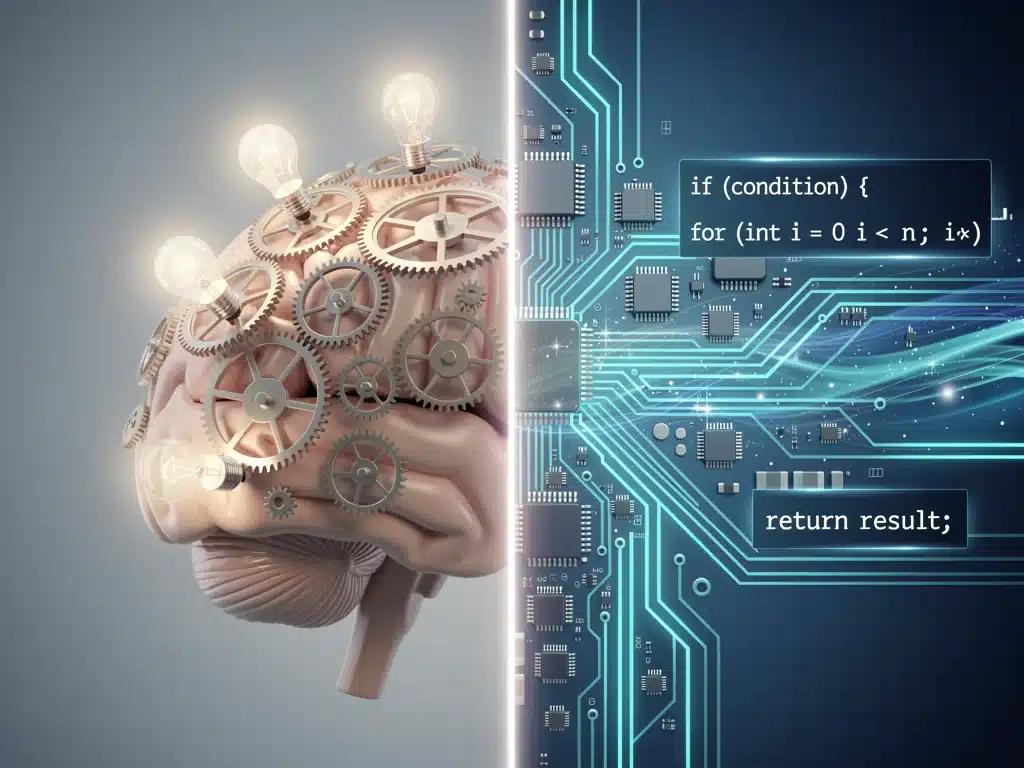
The modern U.S. labor market is caught in a fascinating tension between human intuition and data-driven logic. Navigating Critical Thinking vs. Algorithmic Thinking has officially become the defining factor for American career success in 2026.
While structured computational logic excels at processing data and optimizing step-by-step system efficiencies, it lacks human context.
On the flip side, deep analytical judgment and emotional intelligence allow professionals to question flawed models, innovate, and solve messy, unpredictable corporate challenges.
Relying solely on automated processes is creating a dangerous gap in independent oversight across major industries. The most successful professionals moving forward won’t choose between these two cognitive approaches; they will master both.
Defining Critical Thinking: Beyond Rote Memorization
Critical thinking involves the objective analysis and evaluation of information to form a judgment. It is a higher-order cognitive skill that enables individuals to assess situations, identify biases, and construct reasoned arguments, moving beyond surface-level understanding.
This skill is fundamental for problem-solving in unstructured environments where no predefined solutions exist.
It empowers professionals to challenge assumptions, explore alternative perspectives, and make sound decisions based on evidence and logic, rather than mere intuition or habit.
In the U.S. workforce, critical thinking is increasingly vital for roles requiring strategic planning, innovation, and complex decision-making. It underpins effective leadership, robust research, and the development of novel solutions to unforeseen challenges.
The Core Components of Critical Thought
Critical thinking encompasses several key intellectual processes that work in concert. These components allow individuals to dismantle complex problems and reconstruct them into actionable insights, providing a structured approach to ambiguity.
These elements include analysis, interpretation, inference, explanation, self-regulation, and open-mindedness. Each plays a distinct role in processing information, forming conclusions, and refining one’s own thought processes, making critical thinking a dynamic and adaptive skill.
- Analysis: Breaking down complex information into smaller, manageable parts to understand their relationships.
- Interpretation: Understanding the meaning and significance of data, identifying underlying motives or contexts.
- Inference: Drawing logical conclusions based on evidence and reasoning, even when information is incomplete.
- Evaluation: Assessing the credibility, relevance, and strength of arguments and evidence presented.
Applications in the Modern Workplace
The application of critical thinking spans virtually every sector of the U.S. economy. From healthcare diagnostics to financial forecasting, its presence ensures accuracy, ethical considerations, and strategic foresight in professional practices.
Managers use it to assess market trends and formulate business strategies, while engineers apply it to troubleshoot system failures and design innovative products.
Even in customer service, critical thinking helps representatives resolve unique issues that fall outside standard protocols, demonstrating its pervasive utility.
Its importance is particularly pronounced in fields undergoing rapid change, where established methodologies may quickly become obsolete.
Critical thinking provides the intellectual agility necessary to adapt and thrive in such dynamic environments, making it an indispensable U.S. workforce skill.
Understanding Algorithmic Thinking: The Logic of Automation
Algorithmic thinking refers to the ability to define clear, step-by-step instructions to solve a problem or achieve a goal. It is essentially thinking like a computer programmer, breaking down tasks into discrete, logically ordered steps that can be automated or executed systematically.
This type of thinking is crucial for designing efficient processes, developing software, and optimizing data analysis. It focuses on the predictability and repeatability of actions, ensuring that a given input consistently yields a desired output through a defined sequence of operations.
In the contemporary U.S. workforce, algorithmic thinking is no longer limited to explicit tech roles but is increasingly valuable across various disciplines.
It underpins the successful implementation of automation, artificial intelligence, and data-driven strategies in virtually every industry.
Key Principles of Algorithmic Logic
Algorithmic thinking is built upon foundational principles that guide the construction of logical sequences. These principles ensure that an algorithm is not only effective but also efficient, scalable, and robust in its execution.
Decomposition, pattern recognition, abstraction, and algorithm design are central to this cognitive process.
They provide a framework for approaching problems systematically, transforming complex challenges into solvable, repeatable procedures, which is critical for the evolving U.S. workforce.
- Decomposition: Breaking down a complex problem into smaller, more manageable sub-problems.
- Pattern Recognition: Identifying similarities or trends within problems to leverage existing solutions or strategies.
- Abstraction: Focusing on the essential aspects of a problem while ignoring irrelevant details.
- Algorithm Design: Developing a step-by-step solution to a problem, often expressed as a sequence of instructions.
Impact on Industry and Operations
The impact of algorithmic thinking is evident in the widespread adoption of automation and data science. From optimizing supply chains to personalizing customer experiences, its principles drive efficiency and innovation across sectors.
Logistics companies use algorithms to plan delivery routes, reducing fuel consumption and delivery times. Financial institutions employ them for fraud detection and risk assessment, while manufacturing relies on algorithmic processes for quality control and predictive maintenance.
This pervasive influence highlights its role as an indispensable U.S. workforce skill.
As more tasks become automated, the ability to design, understand, and refine these automated processes becomes a premium skill. Algorithmic thinking is the backbone of this transformation, enabling businesses to scale operations and derive actionable insights from vast datasets.
The Critical Algorithmic Thinking Comparison: Complementary Strengths
While distinct, critical thinking and algorithmic thinking are not mutually exclusive; rather, they represent complementary strengths. Critical thinking often precedes, evaluates, and refines the problems that algorithmic thinking then solves through structured processes.
For instance, critical thinking might identify a new market opportunity or a systemic inefficiency, posing a complex, ill-defined problem. Algorithmic thinking then steps in to devise a systematic, repeatable solution or a data-driven model to address that problem effectively.
This synergy is becoming increasingly important for professionals navigating the complexities of the modern U.S. workforce. Neither skill alone is sufficient to tackle the multifaceted challenges of the next decade, making their combined mastery a powerful asset.

When Critical Thinking Takes the Lead
Critical thinking shines brightest in situations demanding creativity, ethical judgment, and an understanding of human nuances. It is indispensable when problems are ambiguous, context-dependent, or involve unpredictable human behavior.
Consider strategic planning, where leaders must analyze complex market forces, anticipate competitor actions, and make decisions with incomplete information.
Here, critical thinking helps evaluate risks, weigh ethical implications, and formulate adaptable long-term visions, areas where pure algorithmic approaches fall short.
Furthermore, in fields like law, journalism, or counseling, critical thinking is essential for interpreting subjective information, assessing credibility, and making judgments that require empathy and an understanding of complex social dynamics. This reinforces its role as a core U.S. workforce skill.
When Algorithmic Thinking Provides the Solution
Algorithmic thinking excels in scenarios where efficiency, scalability, and precision are paramount. It is the go-to skill for automating repetitive tasks, processing large datasets, and optimizing systems for predictable outcomes, a growing need in the U.S. workforce.
Think about financial trading algorithms that execute transactions based on predefined market conditions, or diagnostic algorithms in medicine that analyze symptoms to suggest probable conditions.
These applications leverage the speed and accuracy that only systematic, algorithmic approaches can provide, illustrating the power of algorithmic thinking.
In data science, algorithmic thinking is fundamental for developing machine learning models and statistical analyses.
It ensures that data is processed and interpreted systematically, yielding reliable insights that drive evidence-based decisions, making it a cornerstone of modern analytical capabilities.
Cultivating Both Skills for U.S. Workforce Readiness
Developing both critical thinking and algorithmic thinking is not merely beneficial but essential for long-term career success in the U.S. workforce. Educational institutions and employers are increasingly recognizing the need to foster these dual capabilities.
Training programs are emerging that integrate problem-solving methodologies with computational thinking exercises.
This integrated approach prepares individuals to not only solve immediate problems but also to design systems that prevent future occurrences, showcasing the importance of Critical Thinking vs. Algorithmic Thinking.
For individuals, actively seeking opportunities to engage in complex problem-solving, learning programming fundamentals, and participating in interdisciplinary projects can significantly enhance both skill sets. This proactive development is key to navigating the future job market.
Educational Strategies for Dual Development
Educational curricula are evolving to incorporate elements that strengthen both critical and algorithmic thinking. This includes project-based learning, case studies, and coding bootcamps that emphasize practical application and systematic problem-solving.
Universities are introducing interdisciplinary courses that blend humanities with computer science, encouraging students to analyze ethical dilemmas through a computational lens or design algorithms that address societal challenges.
This holistic approach prepares graduates for a dynamic professional world.
Early exposure to computational concepts and logic puzzles can lay a strong foundation for algorithmic thinking, while debates, research projects, and philosophical inquiries cultivate critical reasoning.
These combined efforts are shaping a more capable U.S. workforce, ready for a comprehensive Critical Thinking vs. Algorithmic Thinking.
Workplace Initiatives and Continuous Learning
Employers in the U.S. are investing in training programs that enhance both skill sets for their existing workforce.
These initiatives range from workshops on logical reasoning to advanced courses in data analytics and process automation, recognizing the value of Critical Thinking vs. Algorithmic Thinking.
Creating environments that encourage experimentation, constructive feedback, and cross-functional collaboration also fosters the development of these skills.
When employees are empowered to question existing processes and propose innovative solutions, both critical and algorithmic thinking are naturally reinforced.
Furthermore, promoting a culture of continuous learning, where employees are encouraged to pursue certifications in new technologies or engage in challenging projects, ensures that the workforce remains agile and adaptable.
This ongoing development is crucial for maintaining a competitive edge.
Future Trends: The Convergence of Human and Machine Intelligence
The trajectory of the U.S. workforce points towards an increasing convergence of human and machine intelligence. This future state will demand professionals who can effectively leverage algorithmic tools while applying critical judgment to their outputs and implications.
Artificial intelligence and machine learning are rapidly transforming industries, but they require human oversight and ethical considerations.
Critical thinking will be paramount for evaluating AI-generated insights, identifying biases, and setting responsible parameters for automated systems, a key aspect of Critical Thinking vs. Algorithmic Thinking.
Conversely, algorithmic thinking will be essential for designing, implementing, and refining the AI systems themselves, ensuring they are efficient, fair, and aligned with human values.
The symbiotic relationship between these two skills will define success in the next decade, impacting the entire U.S. workforce.

AI and the Enhanced Role of Critical Thinking
As AI systems become more sophisticated, the need for critical thinking intensifies, not diminishes. Professionals must critically assess the relevance and accuracy of AI outputs, understanding their limitations and potential biases inherent in their training data.
For example, in medical diagnostics, while AI can rapidly analyze scans and suggest diagnoses, a human doctor’s critical thinking is indispensable for contextualizing those suggestions with patient history, ethical considerations, and nuanced clinical judgment.
This highlights the indispensable nature of human critical thinking.
Strategic decision-making, especially in high-stakes environments, will continue to rely heavily on human critical faculties.
AI provides powerful analytical support, but the ultimate responsibility for imaginative solutions and ethical choices remains with the human, underscoring the importance of critical thinking in the U.S. workforce.
Algorithmic Thinking in an Automated World
In an increasingly automated world, algorithmic thinking empowers individuals to interact with, manage, and even create the tools that drive efficiency.
It provides the framework for understanding how automated systems function and how they can be optimized.
Professionals in fields from marketing to engineering will need to understand the algorithms that personalize content, optimize campaigns, or control robotic systems.
This knowledge allows them to effectively troubleshoot, adapt, and innovate within an automated ecosystem, making algorithmic thinking a vital U.S. workforce skill.
The ability to break down complex processes into logical steps, even if those steps are executed by machines, ensures that human intention and oversight are maintained.
This proactive engagement with automation, rather than passive consumption, is a hallmark of strong algorithmic thinking.
Ethical Considerations and Societal Impact
The growing prominence of both critical thinking and algorithmic thinking also brings into focus significant ethical considerations and societal impacts. The responsible application of these skills is paramount for ensuring equitable and beneficial technological advancement.
Critical thinking is vital for evaluating the ethical implications of technological innovations, such as data privacy concerns or algorithmic bias.
It prompts questions about fairness, accountability, and the broader societal consequences of automated decision-making, which is a crucial aspect of Critical Thinking vs. Algorithmic Thinking.
Algorithmic thinking, in turn, is essential for designing systems that are transparent, auditable, and built with ethical principles embedded from the outset. This ensures that the power of automation is wielded responsibly, serving humanity’s best interests in the U.S. workforce.
Addressing Algorithmic Bias and Fairness
One of the most pressing ethical challenges is algorithmic bias, where automated systems inadvertently perpetuate or amplify existing societal inequalities. Critical thinking is indispensable for identifying these biases and understanding their origins, whether in data collection or algorithm design.
Professionals with strong critical thinking skills can question the assumptions underlying algorithms and advocate for diverse datasets and inclusive design principles.
This proactive scrutiny is essential for building more equitable AI systems and ensuring fair outcomes for all citizens, a core component of future U.S. workforce development.
Furthermore, algorithmic thinking plays a role in developing technical solutions to mitigate bias, such as fairness-aware algorithms or tools for bias detection and correction.
The combination of both skills is necessary to effectively tackle these complex ethical dilemmas, underscoring the importance of Critical Thinking vs. Algorithmic Thinking.
The Human Element in a Data-Driven World
Despite the rise of data and automation, the human element remains central. Critical thinking ensures that technology serves human values and needs, rather than dictating them. It preserves the capacity for empathy, creativity, and moral judgment, which machines cannot replicate.
The ability to connect disparate pieces of information, grasp complex contexts, and make decisions that weigh human well-being above pure efficiency is a uniquely human capacity.
This makes critical thinking an irreplaceable asset in any data-driven U.S. workforce, ensuring technology remains a tool for human flourishing.
Algorithmic thinking, when paired with critical thinking, allows humans to design systems that augment, rather than diminish, human capabilities.
It enables the creation of tools that empower individuals, enhance productivity, and free up human intellect for higher-order tasks, fostering a balanced and progressive professional environment.
The Indispensable Nature of Both Skills
The evidence is clear: both critical thinking and algorithmic thinking are not just desirable but indispensable for the U.S. workforce of the next decade. Their combined mastery offers a robust framework for navigating unprecedented challenges and opportunities.
One skill without the other leaves a significant gap. Pure algorithmic efficiency without critical oversight risks perpetuating errors or biases, while critical analysis without systematic execution struggles to scale solutions. The synergy between them creates a powerful, adaptive professional.
As industries continue to evolve, the demand for individuals who can seamlessly transition between deep analytical thought and structured problem-solving will only grow
. This dual proficiency defines the resilient and innovative professional poised for success in the dynamic U.S. job market, making the Critical Thinking vs. Algorithmic Thinking more relevant than ever.
| Skill Key Aspect | Primary Contribution |
|---|---|
| Critical Thinking | Evaluates information, solves ambiguous problems, makes ethical decisions. |
| Algorithmic Thinking | Structures steps, automates processes, optimizes for efficiency. |
| Synergy in Workforce | Critical thinking defines problems; algorithmic thinking creates solutions. |
| Future Relevance | Both are crucial for navigating AI, automation, and complex challenges. |
Frequently Asked Questions About Critical Thinking and Algorithmic Thinking
Critical thinking focuses on analyzing and evaluating information to form judgments, particularly in ambiguous situations. Algorithmic thinking involves breaking down problems into precise, sequential steps for systematic execution or automation. One questions ‘why,’ the other defines ‘how.’
The modern U.S. workforce faces complex challenges that require both human judgment and efficient automation. Critical thinking addresses unstructured problems and ethical dilemmas, while algorithmic thinking drives efficiency and scalability through systematic solutions. Their combination ensures comprehensive problem-solving capabilities.
No, algorithmic thinking cannot fully replace critical thinking. While AI excels at processing data and executing predefined tasks, critical thinking is essential for evaluating AI outputs, identifying biases, and making ethical decisions in unique, context-dependent situations. Human oversight remains crucial.
Professionals can develop these skills through continuous learning, engaging in problem-solving projects, and seeking interdisciplinary training. Participating in workshops on logical reasoning, learning programming fundamentals, and actively questioning assumptions in daily tasks are effective strategies to cultivate both.
Critical thinking is vital for identifying ethical dilemmas, such as algorithmic bias or privacy concerns, and evaluating their societal impact. Algorithmic thinking then helps design transparent and fair systems, embedding ethical principles into technical solutions. Both are crucial for responsible technological advancement.
Looking Ahead: Integrating Skills for a Resilient Future
The ongoing comparison of Critical Thinking vs. Algorithmic Thinking for the U.S. workforce highlights a clear mandate: success in the next decade demands an integrated approach to skill development.
The future will increasingly reward those who can not only perform complex analyses but also translate those insights into actionable, systematic processes. This synergy will define adaptable organizations and resilient careers.
As technology continues its rapid advancement, the ability to leverage both human ingenuity and computational power will be a key differentiator.
Professionals must move beyond a siloed understanding of these skills, embracing their complementary nature to drive innovation and address the multifaceted challenges of a dynamic global economy.
The U.S. workforce’s capacity for integrated Critical Thinking vs. Algorithmic Thinking will be its greatest asset.
