Human-Centric Design Thinking: U.S. Innovators’ Next 5 Years

Why do brilliant ideas so often fail in the real world? The answer lies in how we build, making Human-Centric Design Thinking the ultimate differentiator for American creators.
Over the next five years, empathy-driven innovation will separate industry leaders from those left behind. This people-first problem-solving approach turns cold technology into deeply intuitive, real-world experiences.
New research reveals exactly how U.S. trailblazers are shifting their design methodologies to dominate the market. Here is your roadmap to the next wave of user-focused breakthroughs.
The Rise of Human-Centric Design Thinking in U.S. Innovation
The American innovation landscape is undergoing a profound transformation, with a growing emphasis on understanding and addressing user needs at its core.
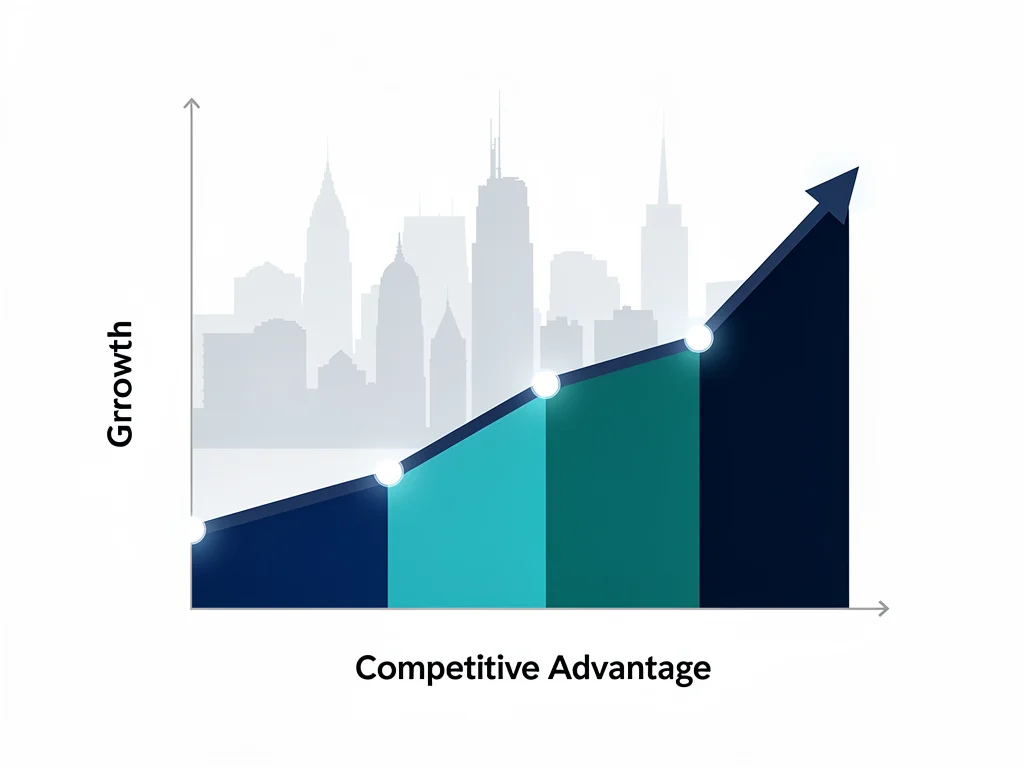
This shift towards Human-Centric Design Thinking is not merely a trend but a strategic imperative for businesses aiming to maintain a competitive edge.
Companies that embrace this methodology are demonstrating superior adaptability and market relevance, moving beyond product-centric approaches to truly connect with their audiences.
This fundamental change is redefining how U.S. innovators approach problem-solving and product development.
Over the next five years, the ability to deeply empathize with users and iteratively refine solutions based on their feedback will distinguish market leaders from those struggling to keep pace. This focus ensures that innovations are not just novel but also genuinely valuable and desirable.
Understanding the Core Principles of Human-Centric Design Thinking
At its essence, Human-Centric Design Thinking is an iterative process that begins with empathy, aiming to understand the end-users’ experiences, challenges, and desires. This foundational step moves beyond assumptions, grounding innovation in real-world human context.
The methodology then progresses through defining the problem, ideating potential solutions, prototyping those solutions, and rigorously testing them with actual users. This continuous feedback loop is crucial for refining concepts and ensuring alignment with user expectations and market demands.
This structured yet flexible approach allows innovators to mitigate risks, reduce development costs, and create products and services that resonate deeply with their target audience.
It fundamentally shifts the focus from what can be built to what should be built to meet human needs effectively.
Empathy as the Foundation for Innovation
Empathy is the cornerstone of effective Human-Centric Design Thinking, requiring innovators to step into the shoes of their users.
This involves conducting interviews, observations, and ethnographic studies to uncover unarticulated needs and pain points that traditional market research often misses.
By truly understanding user perspectives, teams can define problems more accurately and develop solutions that are not just functional but also emotionally resonant and intuitive.
This deep understanding transforms abstract challenges into concrete opportunities for impactful innovation.
Iterative Prototyping and Testing for Refinement
The iterative nature of prototyping and testing is vital for validating assumptions and refining solutions in real-time. Early and frequent testing with users allows for rapid identification of flaws and areas for improvement, preventing costly mistakes down the line.
This cycle of creating, testing, and refining ensures that the final product or service is highly optimized for user satisfaction and effectiveness. It fosters a culture of continuous learning and adaptation, which is essential for navigating dynamic markets.
Strategic Advantages for U.S. Innovators
For U.S. innovators, embracing Human-Centric Design Thinking offers distinct strategic advantages, fostering a culture of continuous improvement and market responsiveness.
This approach enables companies to develop solutions that are not only innovative but also deeply connected to customer needs, creating stronger brand loyalty.
It allows businesses to differentiate themselves in increasingly crowded markets by offering experiences that truly stand out, moving beyond mere product features to deliver holistic value.
This differentiation is crucial for commanding premium pricing and securing market share against global competitors.
Furthermore, this methodology enhances organizational agility, enabling teams to adapt quickly to changing market conditions and emerging customer demands. This flexibility is a powerful asset in the fast-paced competitive environment faced by U.S. businesses today.
Enhanced Customer Loyalty and Brand Equity
When products and services are designed with the user at the forefront, the result is often a more intuitive, enjoyable, and effective experience. This directly translates into heightened customer satisfaction and, consequently, stronger loyalty and advocacy.
Brands known for their user-friendly and thoughtful designs build significant equity, becoming preferred choices in their respective industries. This positive reputation attracts new customers and retains existing ones, contributing to long-term business success.
Accelerated Market Entry and Reduced Risk
By validating ideas early and often through user testing, companies can significantly reduce the risk associated with new product development. This iterative process minimizes the chances of launching a product that fails to meet market needs or expectations.
The ability to quickly develop and test prototypes also accelerates time to market, allowing U.S. innovators to capitalize on emerging opportunities before competitors. This efficiency in the development cycle provides a critical competitive edge.
Impact on U.S. Industries Over the Next Five Years
The influence of Human-Centric Design Thinking is projected to expand across various U.S. industries, reshaping how sectors from healthcare to technology approach innovation.
This pervasive adoption will drive significant shifts in product development, service delivery, and customer engagement strategies.
In healthcare, for instance, it will lead to more patient-friendly interfaces and services, improving health outcomes and patient satisfaction. Technology companies will leverage it to create more intuitive software and hardware, enhancing user experience and adoption rates.
The financial sector will also see transformations, with banking and investment services becoming more accessible and tailored to individual user needs. This widespread adoption underscores its role as a universal framework for creating value and fostering competitive advantage.
Transforming Healthcare and Patient Experiences
Within the U.S. healthcare system, Human-Centric Design Thinking is poised to revolutionize patient care by focusing on the individual’s journey.
This includes redesigning hospital environments, simplifying complex medical procedures, and developing more accessible digital health tools.
The goal is to reduce patient anxiety, improve communication between providers and patients, and ultimately enhance the overall quality and efficiency of care. This patient-first approach will be critical in addressing the evolving demands of the American healthcare landscape.
Driving Innovation in Technology and Software Development
The technology sector, already dynamic, will see even greater emphasis on user experience (UX) and user interface (UI) design, driven by human-centric principles.
This will result in software, applications, and devices that are not just powerful but also exceptionally easy to use and delightful to interact with.
Companies will invest more in understanding how users interact with their products in real-world scenarios, leading to more intuitive designs and fewer usability frustrations.
This focus is essential for maintaining leadership in a global tech market where user satisfaction is paramount.
Challenges and Adaptation for U.S. Companies
While the benefits of Human-Centric Design Thinking are clear, U.S. companies face several challenges in fully integrating this methodology into their operations.
Overcoming these hurdles requires significant organizational change, investment in new skills, and a shift in corporate culture.
Many legacy organizations may struggle with moving away from traditional, product-first development cycles, requiring leadership to champion the change and provide adequate resources. The adoption of new tools and processes also presents a learning curve for existing teams.
However, companies that successfully navigate these challenges will emerge stronger, more adaptable, and better equipped to compete in the complex global marketplace. The investment in human-centric approaches is an investment in future resilience and innovation capacity.
Overcoming Organizational Inertia and Cultural Resistance
A significant barrier to adopting Human-Centric Design Thinking is the inherent inertia within large organizations and resistance to cultural change.
Shifting from a top-down, hierarchical approach to a collaborative, empathetic one requires dedicated effort and consistent reinforcement from leadership.
This includes fostering a safe environment for experimentation and failure, as iterative design inherently involves learning from mistakes. Overcoming entrenched mindsets is crucial for unleashing the full potential of this innovative methodology.
Investing in New Skills and Training
Implementing Human-Centric Design Thinking effectively demands a workforce equipped with specific skills, including ethnographic research, qualitative data analysis, rapid prototyping, and user testing facilitation. Many existing teams may lack these specialized competencies.
U.S. companies must invest in comprehensive training programs and potentially recruit talent with these critical design and research skills. Building internal capabilities in design thinking will be a key factor in successful adoption and sustained innovation.
The Role of Education and Policy in Fostering Human-Centric Design Thinking
For Human-Centric Design Thinking to flourish across the U.S. innovation ecosystem, a concerted effort from educational institutions and policymakers is essential.
Integrating design thinking principles into curricula at various levels can cultivate a generation of problem-solvers equipped for future challenges.
Universities and vocational schools must adapt their programs to include practical training in user research, prototyping, and collaborative design, preparing students for the demands of modern industry. This educational foundation is critical for fueling the next wave of innovators.
Government policies can also play a pivotal role by incentivizing companies to adopt human-centric approaches through grants, tax breaks, or public-private partnerships focused on user-centered innovation. Such support can accelerate the widespread integration of these methodologies.
Curriculum Development for Future Innovators
Educational institutions in the U.S. are increasingly recognizing the importance of teaching Human-Centric Design Thinking as a foundational skill.
This involves developing curricula that emphasize critical thinking, empathy, creativity, and interdisciplinary collaboration from an early stage.
Programs focused on design, engineering, business, and even liberal arts are incorporating these methodologies to ensure graduates are well-prepared to tackle complex real-world problems. This prepares a talent pool ready to drive human-centered innovation.
Government Initiatives and Industry Collaboration
Policy support and collaborative initiatives are vital for scaling the adoption of Human-Centric Design Thinking. Government agencies can fund research into user experience, establish best practice guidelines, and create platforms for knowledge sharing among industries.
Partnerships between industry leaders, academic institutions, and government bodies can create ecosystems that nurture human-centric innovation. These collaborations can lead to shared resources, pooled expertise, and a unified push towards user-focused development.
Comparison with Traditional Innovation Models
The distinction between Human-Centric Design Thinking and traditional innovation models lies primarily in their starting points and iterative processes.
Traditional models often begin with technological capabilities or market opportunities, sometimes overlooking the nuanced needs of end-users.
These older approaches can be linear, moving from concept to development to launch with limited user feedback until late stages, leading to products that may not fully resonate. This can result in costly reworks or market failures if initial assumptions are incorrect.
In contrast, human-centric design places the user at the very beginning and throughout the entire process, ensuring continuous validation and adaptation. This difference in philosophy yields more relevant, desirable, and ultimately successful innovations.
From Product-Centric to User-Centric Development
Traditional innovation often prioritizes what a company can build or sell, focusing on internal capabilities and existing technologies.
While efficient for certain contexts, this product-centric view can miss critical user insights, leading to features nobody needs or complex interfaces.
Human-Centric Design Thinking flips this paradigm, starting with a deep understanding of user problems and desires. This ensures that every development effort is directly addressing a genuine need, making the resulting product or service inherently more valuable and adopted.
Risk Mitigation Through Early Validation
Traditional innovation models typically involve significant investment before real-world user validation occurs, increasing the financial risk of failure. This ‘build it and they will come’ mentality can be extremely costly if the market does not respond as anticipated.
By integrating continuous user feedback and prototyping, Human-Centric Design Thinking allows for early and inexpensive validation of ideas.
This iterative testing helps identify and rectify issues early in the development cycle, drastically reducing the overall risk and maximizing investment efficiency.
Future Trends and Evolution of Human-Centric Design Thinking
Looking ahead, Human-Centric Design Thinking will not remain static but will evolve to incorporate advancements in technology and shifts in societal values.
The integration of artificial intelligence and data analytics will further enhance its capabilities, allowing for even deeper insights into user behavior.
The methodology will also become more embedded in organizational structures, moving beyond specialized design teams to become a pervasive mindset across all departments. This holistic integration will transform entire companies into truly user-focused entities.
Furthermore, sustainability and ethical considerations will increasingly be woven into the fabric of human-centric design, ensuring that innovations are not only desirable but also responsible and beneficial for society at large. This evolution will broaden its impact and relevance.
Integration with AI and Data Analytics
The future of Human-Centric Design Thinking will undoubtedly involve a deeper integration with artificial intelligence and advanced data analytics. AI can process vast amounts of user data to identify patterns, predict behaviors, and even generate preliminary design ideas, augmenting human creativity.
Data analytics provides quantitative validation for qualitative user insights, offering a more robust understanding of user needs and preferences. This fusion will enable U.S. innovators to create hyper-personalized and highly effective solutions with unprecedented precision.
Emphasis on Ethical Design and Inclusivity
As technology becomes more pervasive, the ethical implications of design choices are gaining prominence.
Future Human-Centric Design Thinking will place a stronger emphasis on ethical considerations, ensuring that products and services are not only user-friendly but also fair, transparent, and respectful of privacy.
Inclusivity will also be a core tenet, moving beyond accessibility to design solutions that genuinely cater to diverse populations, including those with varying abilities, cultural backgrounds, and socio-economic statuses.
This commitment to ethical and inclusive design will be a hallmark of leading U.S. innovators.
Adopting Human-Centric Design Thinking: A Blueprint for Success
Successfully adopting Human-Centric Design Thinking requires a clear blueprint that addresses both strategic and operational aspects within U.S. organizations.
It is not a one-time project but a continuous journey of learning, adaptation, and integration into the company’s DNA.
This blueprint involves securing executive buy-in, establishing cross-functional teams, investing in training, and creating dedicated spaces and tools for design thinking activities.
A phased approach can help organizations gradually integrate the methodology without overwhelming existing structures.
Ultimately, making human-centric design a core competency will empower U.S. innovators to consistently deliver value, build strong customer relationships, and sustain growth in an increasingly competitive global economy. This proactive embrace is vital for long-term relevance.
Building Cross-Functional Design Thinking Teams
Effective implementation of Human-Centric Design Thinking hinges on creating diverse, cross-functional teams that bring together varied perspectives and expertise.
Engineers, marketers, designers, and business strategists collaborating from the outset can identify more holistic solutions and anticipate challenges.
These teams should be empowered with the autonomy and resources to conduct user research, experiment with prototypes, and iterate rapidly. This collaborative environment fosters a shared understanding of user needs and accelerates the innovation process.
Measuring the Impact and Demonstrating ROI
To ensure sustained investment and support for Human-Centric Design Thinking, U.S. innovators must effectively measure its impact and demonstrate a clear return on investment (ROI).
This involves tracking key metrics such as customer satisfaction, user engagement, market share, and revenue growth attributed to human-centric initiatives.
Quantifying these benefits helps justify resources, secures continued leadership buy-in, and encourages broader adoption across the organization. Proving tangible results is crucial for integrating design thinking as a fundamental business strategy.
| Key Aspect | Description |
|---|---|
| Core Philosophy | Prioritizes deep understanding of user needs and experiences over product features. |
| Strategic Advantage | Drives innovation, enhances customer loyalty, and accelerates market entry for U.S. firms. |
| Industry Impact | Reshaping healthcare, technology, and finance through user-centric solutions. |
| Future Evolution | Integrating AI, data analytics, and ethical considerations for more impactful design. |
Frequently Asked Questions About Human-Centric Design Thinking
Human-Centric Design Thinking is an iterative problem-solving methodology that places the human user at the center of the design process. It involves empathizing with users, defining their needs, ideating solutions, prototyping, and testing to create products and services that truly meet their requirements.
It is crucial because it enables U.S. innovators to create highly relevant and desirable solutions, fostering stronger customer loyalty and providing a significant competitive edge. This approach helps differentiate companies in a rapidly evolving global market by focusing on genuine user value.
Unlike traditional innovation, which often starts with technology or market opportunity, Human-Centric Design Thinking begins with deep user empathy. It employs continuous feedback loops and iterative refinement, reducing risks and ensuring solutions are genuinely needed and desired by the end-user.
All industries will be affected, but healthcare, technology, and financial services are expected to see profound transformations. Human-Centric Design Thinking will lead to more intuitive patient experiences, user-friendly software, and accessible financial products, improving overall service delivery.
Companies often face organizational inertia, cultural resistance to change, and a lack of specialized skills. Overcoming these requires strong leadership, investment in training, and a willingness to embrace iterative processes and learn from early failures to integrate the methodology effectively.
Looking Ahead: The Enduring Value of Human-Centric Design Thinking
The sustained emphasis on Human-Centric Design Thinking signifies a long-term strategic shift for U.S. innovators, moving beyond short-term gains towards sustainable value creation.
This approach will continue to evolve, integrating new technologies and ethical considerations to refine its impact.
Companies that proactively embed human-centric principles into their core operations will not only survive but thrive, building resilient business models capable of adapting to future disruptions. This adaptability is paramount for maintaining leadership in a dynamic global economy.
The next five years will clearly demonstrate that prioritizing the human element in design is not just a methodology but a fundamental philosophy driving competitive advantage and meaningful innovation across the United States.
