Sustainable Packaging Innovations of 2026: How 6 New Materials Are Reducing Plastic Waste by 35%
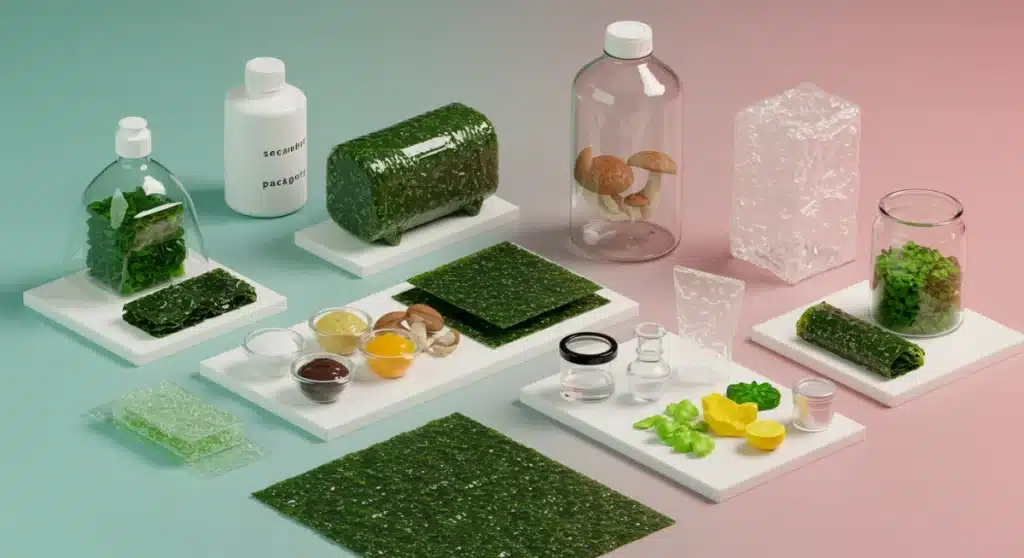
As the global fight against environmental degradation intensifies, Sustainable Packaging Innovations are no longer just an industry trend but a structural necessity for 2026.
Retailers and manufacturers are rapidly adopting circular economy strategies to overhaul how products are protected, delivered, and discarded.
Six groundbreaking eco-friendly materials are currently leading the charge, promising a significant 35% reduction in synthetic debris across the consumer goods sector.
From compostable bio-polymers to mycelium-based buffers, these breakthroughs are effectively replacing traditional single-use petroleum derivatives with high-performance, renewable alternatives.
For the United States market, these advancements signal a pivotal shift toward meeting aggressive waste-reduction mandates and state-level regulatory deadlines.
Monitoring these bio-based shifts and smart, label-free technologies is essential for any brand aiming to stay competitive in this new era of green logistics.
The Dawn of a New Era in Packaging Sustainability
The year 2026 marks a pivotal moment for environmental responsibility within the consumer goods sector. New materials and technologies are emerging, promising substantial reductions in plastic waste and fostering a more circular economy.
This transformation is driven by increasing consumer demand, stringent regulatory pressures, and a collective industry commitment to mitigating ecological footprints.
The focus is squarely on viable alternatives that maintain product integrity while drastically lowering environmental impact.
These sustainable packaging innovations are not merely incremental improvements; they represent fundamental shifts in material science and design.
The goal is to achieve a 35% reduction in plastic waste, a target that, if met, would signify a monumental victory for global sustainability efforts.
Six Breakthrough Materials Leading the Charge Against Plastic Waste
The forefront of this revolution features six distinct materials, each offering unique properties and applications. These innovations are moving beyond niche markets, rapidly approaching mainstream adoption across various consumer goods categories.
From bio-based polymers to advanced paper composites, these materials are engineered to be either fully compostable, biodegradable, or infinitely recyclable. Their development reflects years of research and significant investment by both established corporations and agile startups.
Understanding the characteristics and potential of each material is crucial for grasping the full scope of these sustainable packaging innovations. Their collective impact is projected to redefine how products are packaged and consumed globally.
Seaweed-Based Films and Coatings
Seaweed-derived materials are gaining considerable traction due to their rapid growth, abundance, and biodegradability. These films offer excellent barrier properties, making them suitable for food and beverage packaging, where moisture and oxygen protection are critical.
Companies are actively developing transparent, flexible films from seaweed extracts that dissolve harmlessly in water or compost. This innovation provides a direct alternative to single-use plastic films, addressing a significant portion of current plastic waste.
- Biodegradability: Decomposes naturally in marine and terrestrial environments.
- Scalability: Seaweed cultivation is highly efficient and sustainable.
- Versatility: Can be used for wraps, sachets, and protective coatings.
Mushroom-Derived Mycelium Composites
Mycelium, the root structure of mushrooms, is being harnessed to create durable, lightweight, and compostable packaging. This material offers a robust alternative to polystyrene foam, commonly used for protective packaging.
Grown using agricultural waste as a substrate, mycelium composites are a prime example of circular economy principles in action. They provide excellent cushioning and insulation, making them ideal for electronics, fragile goods, and even some food containers.
- Compostability: Breaks down completely into natural nutrients.
- Protective Qualities: Offers superior shock absorption and insulation.
- Resource Efficiency: Utilizes agricultural byproducts, reducing waste.
Advanced Plant-Based Plastics (Bioplastics)
The next generation of bioplastics moves beyond earlier iterations, offering enhanced performance and broader applicability. These materials are derived from renewable biomass sources such as corn starch, sugarcane, and cellulose, significantly reducing reliance on fossil fuels.
Innovations in bioplastic technology now include materials that are not only compostable but also possess improved heat resistance and durability.
This expansion allows them to replace conventional plastics in more demanding applications, from rigid containers to flexible pouches.
The development of these advanced bioplastics is crucial for achieving the 35% plastic waste reduction target. Their ability to mimic traditional plastic properties while offering environmental benefits makes them a cornerstone of future sustainable packaging innovations.
Paper-Based Packaging with Integrated Barriers
While paper has long been a staple, new advancements integrate high-performance barrier coatings directly into paper fibers. These innovations allow paper-based packaging to protect contents from moisture, grease, and oxygen, functions traditionally reserved for plastics.
This approach minimizes the use of plastic linings, rendering more paper packaging fully recyclable or compostable. It represents a significant step forward for categories like food service, dry goods, and personal care products, where barrier properties are essential.
- Enhanced Recyclability: Reduces or eliminates non-recyclable plastic layers.
- Renewable Resource: Utilizes sustainably managed forest products.
- Broader Application: Extends paper’s utility to moisture-sensitive products.
Edible Packaging Solutions for Food and Beverages
Perhaps the most direct route to eliminating packaging waste is making the packaging edible. Innovations in this area include films and capsules made from natural ingredients that can be consumed along with the product, or simply composted.
These solutions are particularly impactful for single-serving portions of liquids, condiments, and snacks, where conventional plastic waste accumulates rapidly.
While still in early stages for some applications, their potential for waste reduction is immense and highly visible to consumers.
The appeal of edible packaging lies not just in its environmental benefits, but also in its novelty and potential to enhance consumer experience. This area of sustainable packaging innovations is expected to grow as technologies mature and regulatory frameworks adapt.
Recycled Content Polymers with Enhanced Properties
Beyond new materials, the advancement of recycled content polymers is critical.
Innovations here focus on improving the quality and performance of post-consumer recycled (PCR) plastics, making them suitable for a wider range of applications, including food-grade packaging.
New sorting and reprocessing technologies are enabling higher purity and consistency in PCR materials, challenging the perception that recycled plastic is inferior. This directly reduces the demand for virgin plastic production, closing the loop on plastic usage.
- Circular Economy: Keeps existing plastic materials in circulation.
- Reduced Virgin Plastic Demand: Lowers reliance on fossil fuel-derived plastics.
- Improved Quality: Advanced processes yield high-performance recycled materials.
Industry Collaboration and Regulatory Impetus for Change
The momentum behind these sustainable packaging innovations is significantly bolstered by unprecedented industry collaboration. Major brands, packaging manufacturers, and material scientists are forming alliances to accelerate research, development, and adoption.
These partnerships are crucial for scaling up new material production and integrating them into complex supply chains. Shared knowledge and resources are proving vital in overcoming technical and economic hurdles.
Concurrently, regulatory bodies across the United States and globally are introducing policies that incentivize sustainable practices and penalize excessive plastic waste.
Extended Producer Responsibility (EPR) schemes and specific reduction targets are driving companies to invest in these new packaging solutions.
Consumer Demand as a Driving Force
Consumer preferences are playing an increasingly powerful role in shaping the packaging landscape. A growing segment of the population actively seeks out products with environmentally friendly packaging, influencing purchasing decisions and brand loyalty.
Brands that demonstrate a clear commitment to sustainable packaging innovations are gaining a competitive edge. This market pressure reinforces the business case for adopting new materials and practices, creating a virtuous cycle of innovation and demand.
- Brand Loyalty: Consumers favor eco-conscious brands.
- Market Differentiation: Sustainable packaging offers a competitive advantage.
- Education: Increased consumer awareness drives demand for alternatives.
Challenges and the Path to Achieving 35% Plastic Waste Reduction
While the outlook for sustainable packaging innovations is positive, significant challenges remain on the path to a 35% plastic waste reduction.
These include scaling production of new materials, ensuring cost-effectiveness, and establishing robust recycling and composting infrastructures.
The transition requires substantial investment in new manufacturing facilities and supply chain adjustments. Additionally, consumer education is vital to ensure proper disposal of novel materials, maximizing their environmental benefits.
Addressing these hurdles will require continued collaboration between industry, government, and consumers. The ambitious target of reducing plastic waste by 35% necessitates a concerted, multi-pronged effort across all sectors involved in the lifecycle of consumer goods packaging.
Standardization and Infrastructure Development
A key challenge lies in standardizing new material specifications and developing the necessary infrastructure for their end-of-life management. Without clear guidelines and accessible facilities, even the most innovative materials risk ending up in landfills.
This includes expanding industrial composting facilities, enhancing material recovery processes for advanced recyclables, and establishing clear labeling systems for consumers. Effective infrastructure is paramount for the success of these sustainable packaging innovations.
- Recycling Streams: Need for dedicated or adapted recycling facilities.
- Compost Facilities: Expansion of industrial composting capacity.
- Labeling: Clear instructions for consumers on proper disposal.
The Economic and Environmental Impact of Sustainable Packaging Innovations
The economic implications of embracing sustainable packaging innovations are far-reaching. While initial investments can be substantial, the long-term benefits include reduced waste disposal costs, enhanced brand reputation, and access to new markets driven by sustainability.
Environmentally, achieving a 35% reduction in plastic waste would significantly lower greenhouse gas emissions associated with plastic production and disposal. It would also mitigate ocean pollution and protect ecosystems from plastic contamination.
This shift represents a strategic imperative for businesses and a critical step for planetary health. The widespread adoption of these sustainable packaging innovations is poised to deliver both ecological restoration and economic resilience.
Investment in Research and Development
Continued investment in research and development is crucial for refining existing sustainable packaging innovations and discovering new ones. Breakthroughs in material science, biodegradation, and circular design will further accelerate progress.
Funding for academic institutions, startups, and corporate R&D departments will ensure a continuous pipeline of solutions. This ongoing commitment is essential to meet and exceed future sustainability targets for packaging.
- Material Science: Development of next-generation eco-materials.
- Process Optimization: Improving manufacturing efficiency and sustainability.
- Circular Design: Creating packaging that is inherently sustainable by design.
| Key Innovation | Impact on Plastic Waste |
|---|---|
| Seaweed-Based Films | Replaces single-use plastic films, biodegradable in nature. |
| Mycelium Composites | Alternative to polystyrene foam, fully compostable. |
| Advanced Bioplastics | Reduces fossil fuel dependence, offers compostable options. |
| Integrated Barrier Paper | Enhances paper recyclability, replaces plastic linings. |
Frequently Asked Questions About Sustainable Packaging Innovations
The main objective is to significantly reduce plastic waste in consumer goods by introducing environmentally friendly alternatives. These innovations aim for a 35% reduction by 2026, focusing on biodegradability, compostability, and enhanced recyclability to mitigate environmental impact effectively.
Seaweed-based films offer a direct, biodegradable replacement for conventional plastic wraps and sachets. They decompose naturally in various environments, eliminating persistent plastic pollution. Their rapid, sustainable cultivation also reduces the ecological footprint associated with material sourcing.
Initially, some new materials may present higher costs due to scaling and technological development. However, long-term cost benefits include reduced waste disposal fees, enhanced brand image, and potential market access advantages. Economies of scale are expected to lower prices as adoption increases.
Consumer behavior is critical. Demand for eco-friendly products drives brands to adopt sustainable packaging innovations. Proper disposal of these new materials, such as composting or recycling, is also essential for their environmental benefits to be fully realized, requiring public education and clear labeling.
Key challenges include scaling production to meet demand, establishing universal standards for new materials, and developing robust recycling and composting infrastructures. Overcoming these requires significant investment, cross-industry collaboration, and supportive regulatory frameworks to ensure widespread, effective implementation.
Impact and Implications
The push towards sustainable packaging innovations represents a fundamental shift in how consumer goods are brought to market.
The projected 35% reduction in plastic waste by 2026 is an ambitious yet achievable goal, signaling a collective commitment to environmental stewardship.
Stakeholders must continue to monitor policy developments, technological advancements, and consumer response, as these factors will dictate the pace and ultimate success of this critical transition towards a more sustainable future.
