Green Building Standards in 2026: Achieving LEED Certification for Commercial Properties
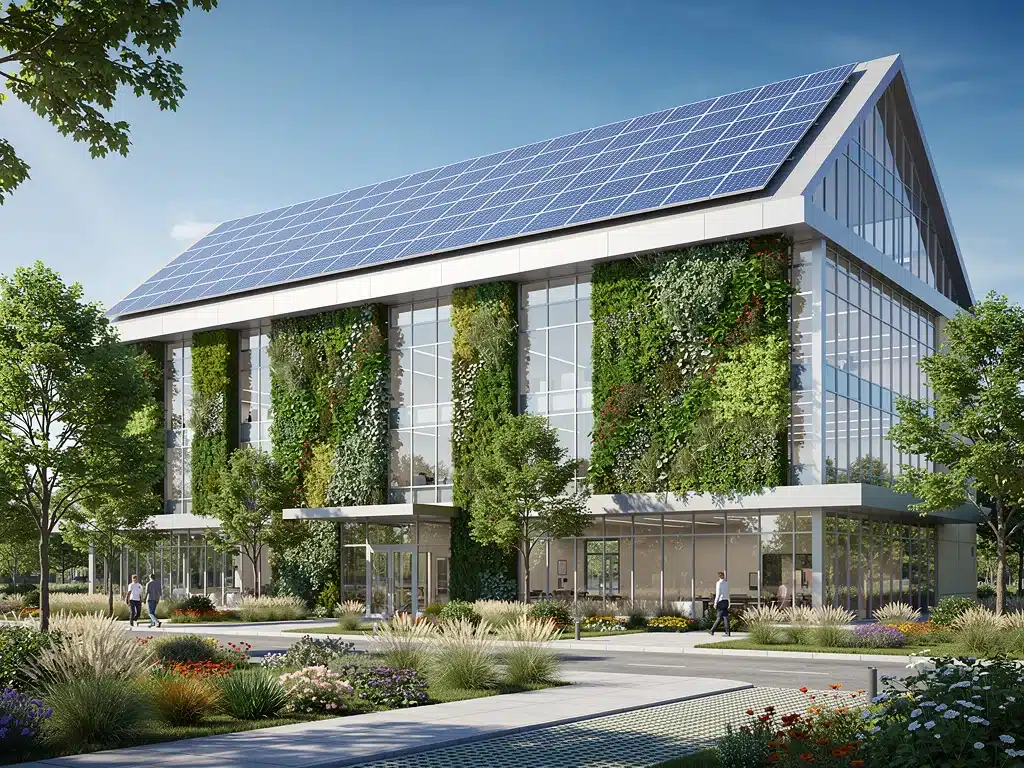
In today’s real estate market, obtaining LEED Certification is no longer just a badge of honor—it is a critical strategy for driving long-term asset value.
As sustainability expectations reach new heights, commercial property owners are rapidly modernizing their portfolios to meet rigorous environmental standards.
Pursuing these globally recognized eco-credentials requires a fresh approach to sustainable architecture and energy efficiency.
From decarbonization tactics to indoor air quality, modern green building frameworks demand smarter operational choices that significantly lower footprint and operational costs.
For developers, investors, and facility managers, adapting to these updated green rating systems is essential for staying competitive.
Aligning your properties with high-performance environmental benchmarks ensures your assets remain future-proof, highly attractive to tenants, and financially resilient.
Understanding the Evolving Landscape of Green Building Standards in 2026
The year 2026 marks a significant juncture for environmental sustainability in the construction industry, particularly in the United States.
New regulations and heightened awareness are pushing for more stringent Green Building Standards, impacting how commercial properties are designed, constructed, and operated.
These evolving standards are not merely suggestions but increasingly becoming legal mandates in various jurisdictions, aiming to reduce carbon footprints, conserve resources, and enhance occupant well-being.
Understanding these shifts is crucial for any entity involved in commercial real estate to maintain competitiveness and compliance.
The push towards more sustainable infrastructure reflects a global commitment to addressing climate change, with the U.S. playing a vital role in setting benchmarks for environmental performance. Property stakeholders must stay informed to adapt proactively to these changes.
The Imperative of LEED Certification for Commercial Properties
LEED (Leadership in Energy and Environmental Design) certification remains the most widely recognized and respected standard for green buildings globally, and its importance for commercial properties in 2026 cannot be overstated.
Achieving LEED certification signifies a commitment to sustainability and provides tangible benefits.
This certification process evaluates buildings based on various criteria, including energy efficiency, water conservation, sustainable site development, materials selection, and indoor environmental quality.
For commercial properties, LEED certification translates into reduced operating costs, enhanced marketability, and improved tenant satisfaction.
As Green Building Standards in 2026 continue to tighten, LEED certification serves as a robust framework for compliance and a powerful differentiator in a competitive market. It demonstrates a forward-thinking approach to real estate development and management.
Key Updates and Changes in LEED v4.1 for Commercial Projects
LEED v4.1, the latest iteration of the rating system, introduces several significant updates that commercial property developers must understand for Green Building Standards in 2026.
These revisions aim to make the certification process more accessible, performance-driven, and aligned with current sustainability goals.
Key changes include a stronger emphasis on performance metrics, encouraging projects to demonstrate actual energy and water savings rather than just design intent. This shift requires more rigorous monitoring and data collection throughout the building’s lifecycle.
Additionally, LEED v4.1 integrates new credits focusing on resilience, social equity, and embodied carbon, reflecting a holistic approach to sustainable development. These updates underscore the evolving nature of green building practices.
Enhanced Performance Tracking and Data Requirements
The updated LEED v4.1 places a significant premium on verifiable performance data. Commercial properties seeking certification in 2026 will need robust systems for monitoring energy consumption, water usage, and indoor air quality.
This means moving beyond theoretical models to actual operational data, providing a more accurate representation of a building’s environmental impact. Developers and property managers must invest in smart building technologies and data analytics to meet these new requirements effectively.
Focus on Embodied Carbon and Material Transparency
Another critical area of focus in LEED v4.1 for Green Building Standards in 2026 is embodied carbon—the greenhouse gas emissions associated with the manufacturing, transportation, installation, maintenance, and disposal of building materials.
There is a growing demand for transparency in material sourcing.
Commercial projects will need to prioritize materials with lower embodied carbon footprints and provide documentation, such as Environmental Product Declarations (EPDs), to demonstrate their environmental attributes. This encourages a more circular economy approach in construction.
- Prioritize materials with low embodied carbon.
- Utilize Environmental Product Declarations (EPDs).
- Embrace recycled and locally sourced materials.
- Support manufacturers committed to sustainable practices.
Strategic Planning for LEED Certification in 2026
Achieving LEED certification for commercial properties in 2026 requires meticulous planning and a proactive approach from the project’s inception. Integrating sustainability goals early in the design phase is paramount to success and cost-effectiveness.
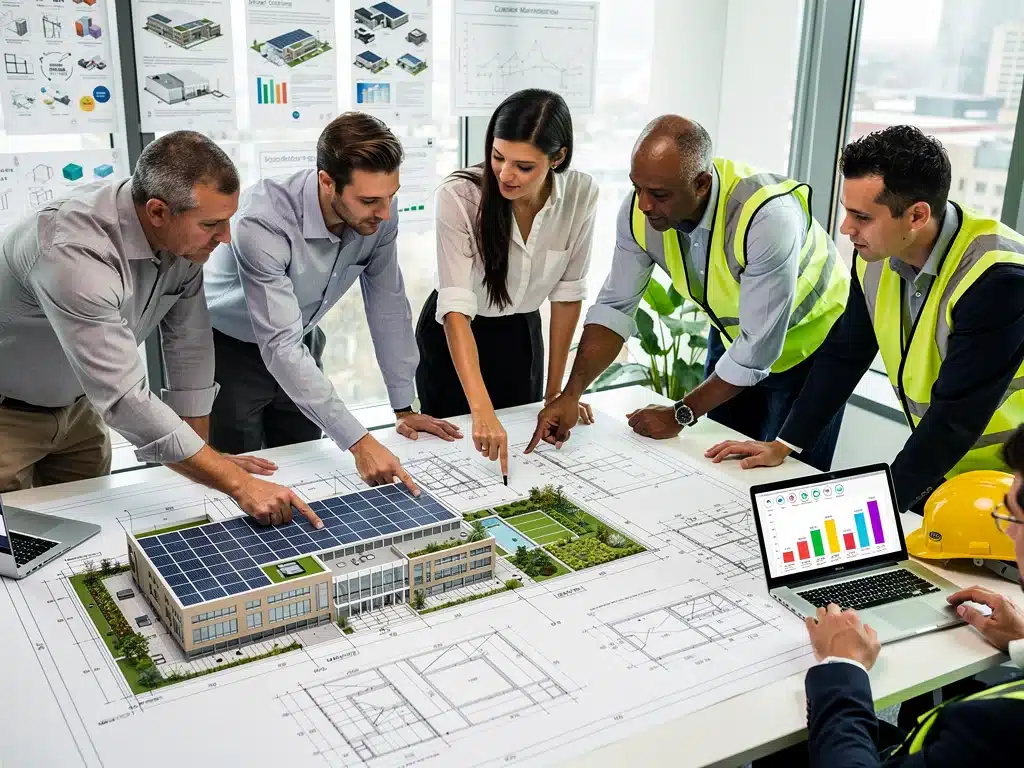
Engaging a multi-disciplinary team, including LEED-accredited professionals, architects, engineers, and contractors, is essential to navigate the complexities of the certification process.
Early collaboration ensures that all aspects of the project align with LEED requirements and Green Building Standards.
Furthermore, conducting a comprehensive cost-benefit analysis at the outset helps in identifying potential financial incentives, long-term savings, and market advantages associated with LEED certification. This strategic foresight is critical for successful project delivery.
Benefits of Achieving LEED Certification for Commercial Properties
The advantages of achieving LEED certification extend far beyond environmental stewardship, offering significant economic and social benefits for commercial properties. These benefits are increasingly recognized by investors, tenants, and regulatory bodies, making LEED a valuable asset.
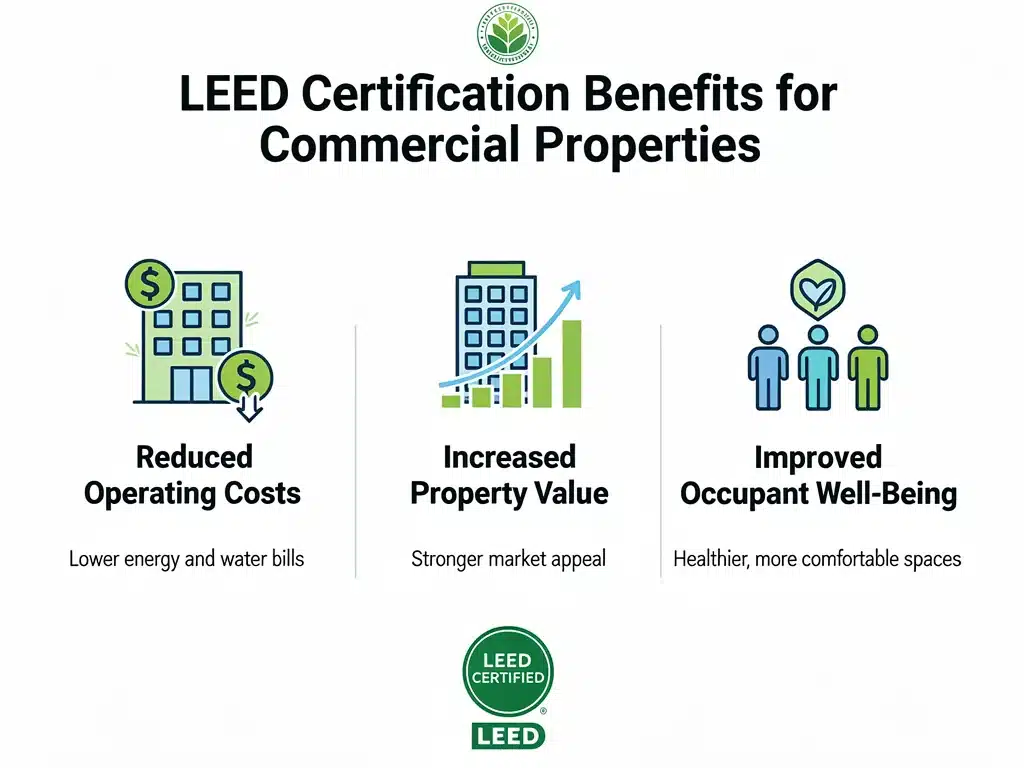
LEED-certified buildings often command higher rental rates and property values, demonstrating a strong return on investment for developers. They also experience lower operating costs due to increased energy and water efficiency, directly impacting the bottom line.
Moreover, these properties contribute to improved occupant health and productivity through better indoor air quality, natural light, and comfortable environments. This makes them highly attractive to tenants seeking modern, healthy, and efficient workspaces.
Financial Incentives and Market Competitiveness
Numerous financial incentives, including tax credits, grants, and expedited permitting processes, are available for LEED-certified commercial properties across the United States. These incentives can significantly offset the initial costs associated with green building practices.
In a market increasingly valuing sustainability, LEED certification provides a competitive edge, attracting environmentally conscious tenants and investors. It also enhances a company’s brand image, aligning with corporate social responsibility goals.
Enhanced Occupant Well-being and Productivity
LEED-certified commercial properties are designed with occupant health and comfort in mind. Features like improved ventilation, access to natural light, and the use of low-VOC materials contribute to a healthier indoor environment.
Studies have shown that occupants in green buildings report higher satisfaction, fewer sick days, and increased productivity. This makes LEED-certified spaces highly desirable for businesses looking to optimize their workforce’s performance and well-being.
- Reduced energy and water consumption.
- Higher property values and rental rates.
- Access to financial incentives and tax breaks.
- Improved indoor environmental quality.
- Enhanced occupant health and productivity.
Overcoming Challenges in LEED Certification Process
While the benefits are clear, achieving LEED certification for commercial properties can present several challenges. These typically involve navigating complex documentation requirements, managing initial costs, and ensuring seamless coordination among project teams.
One common hurdle is the perception of higher upfront costs for sustainable materials and technologies. However, long-term operational savings and various incentives often outweigh these initial investments, emphasizing the need for comprehensive financial analysis.
Another challenge lies in the stringent documentation and reporting required by the LEED rating system. This necessitates dedicated resources and expertise to ensure all criteria are met and accurately submitted for review.
The Role of Technology in Meeting 2026 Green Building Standards
Advancements in technology are playing an increasingly crucial role in helping commercial properties meet Green Building Standards in 2026 and achieve LEED certification. Smart building systems, data analytics, and innovative materials are transforming how buildings perform.
Building Information Modeling (BIM) allows for integrated design and construction, optimizing material use and energy performance from the outset. IoT sensors and AI-powered platforms enable real-time monitoring and management of building systems, leading to significant efficiencies.
These technologies not only aid in achieving certification but also ensure ongoing compliance and performance optimization throughout the building’s operational life. Embracing these tools is vital for future-proofing commercial assets.
Future Outlook for Green Building Standards and Commercial Real Estate
The trajectory for Green Building Standards in 2026 suggests a continued push towards more rigorous environmental performance and sustainability in commercial real estate. This trend is driven by regulatory pressures, investor demands, and growing tenant preferences for eco-friendly spaces.
We can anticipate further integration of circular economy principles, with an increased focus on adaptive reuse of existing structures and the reduction of construction waste. The industry is moving towards a more resource-efficient and less impactful model.
LEED certification will remain a critical benchmark, evolving to incorporate new technologies and best practices. Commercial properties that proactively embrace these standards will be better positioned for long-term success and resilience in a changing climate.
| Key Point | Brief Description |
|---|---|
| Evolving Standards | Green Building Standards in 2026 are becoming more stringent and performance-driven, especially for commercial properties. |
| LEED Importance | LEED certification remains crucial for marketability, operational savings, and regulatory compliance of commercial properties. |
| LEED v4.1 Updates | New emphasis on performance data, embodied carbon, and resilience for commercial projects seeking certification. |
| Strategic Planning | Early integration of sustainability goals and expert collaboration are key for successful LEED certification in 2026. |
Frequently Asked Questions About Green Building Standards
The primary changes for Green Building Standards in 2026 include a stronger focus on verifiable performance data, reduced embodied carbon in materials, and enhanced resilience measures. These updates aim to drive more tangible environmental benefits and comprehensive sustainability practices across commercial properties.
LEED Certification is critical for commercial properties because it offers significant market advantages, including higher property values and rental rates. It also leads to reduced operating costs through energy and water efficiency, and provides access to financial incentives, making it a sound investment.
LEED v4.1 impacts commercial property certification by emphasizing actual building performance over design intent. It requires more rigorous data collection for energy and water usage and introduces new credits for embodied carbon and social equity, pushing for more holistic sustainable design and operation.
The main benefits of achieving LEED Certification include significant reductions in operational costs, increased property value, and enhanced marketability. Additionally, it leads to improved indoor environmental quality, contributing to better occupant health and productivity, and supports corporate sustainability goals.
Technology plays a crucial role in meeting 2026 Green Building Standards by enabling integrated design through BIM, real-time performance monitoring with IoT sensors, and data-driven optimization. These tools help commercial properties achieve and maintain LEED certification efficiently, ensuring long-term sustainability and compliance.
Looking Ahead
The evolving Green Building Standards in 2026, particularly those impacting LEED Certification for Commercial Properties, signal a clear direction for the real estate sector.
Stakeholders must prioritize proactive engagement with these standards to ensure compliance, maximize economic benefits, and contribute to a sustainable future.
The continued integration of technology and a holistic approach to design and operation will be key determinants of success in this transforming landscape.
